
A Queer Space of Their Own
Queer Austrian Cinema
Curated for Vienna Shorts 2026, Jul Trier’s programme on queer Austrian cinema precipitates a significant formal and thematic eclecticism that echoes the notion of queer itself as a call for the dismantling of familiar boundaries.
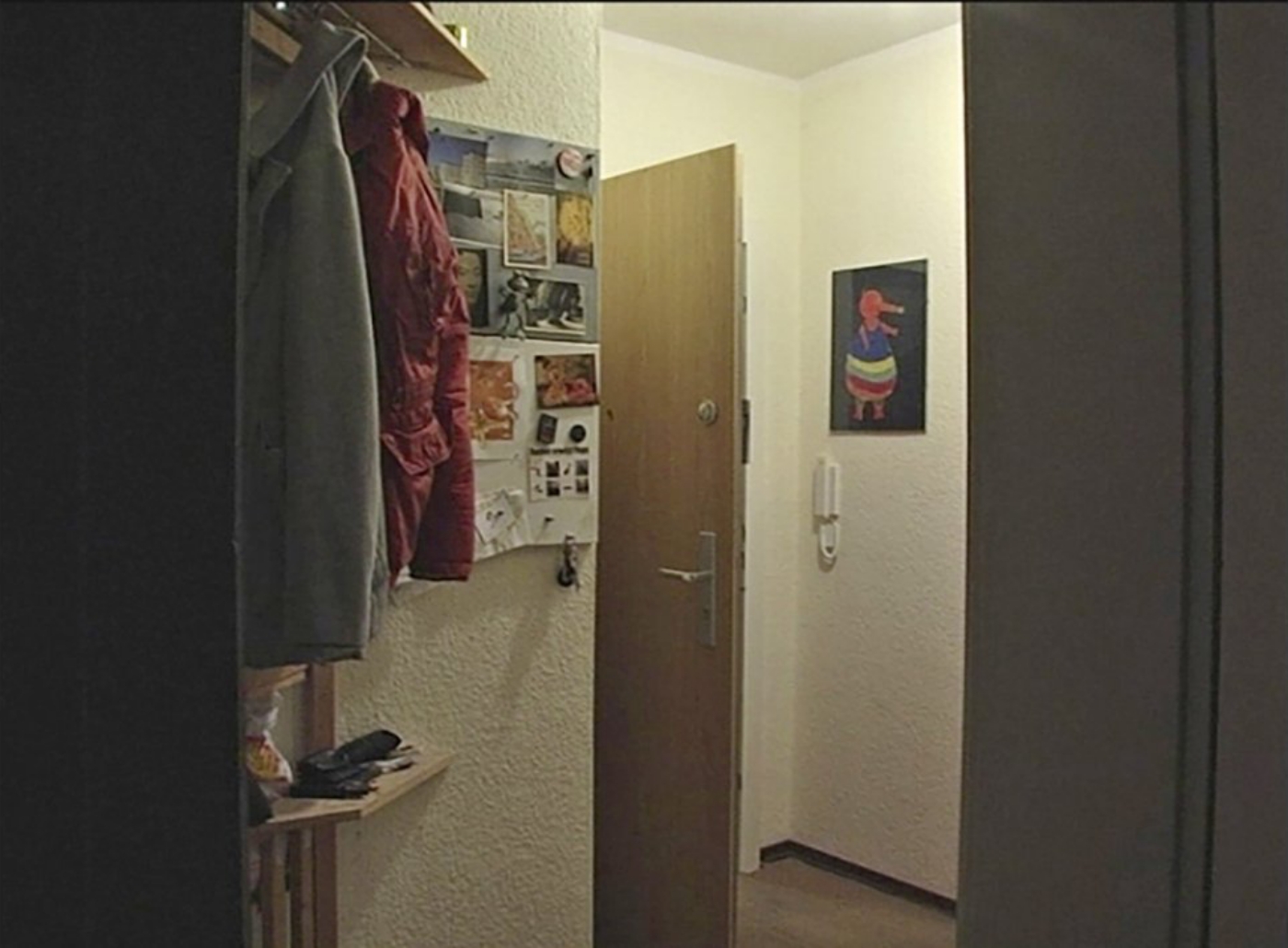
In a small, sparsely furnished living room, an older man quietly undresses for sex. It’s dusky outside, but inside, the warm light bounces off the peach-orange walls. The man takes his time, carefully placing the clothing he had just disrobed onto the furniture. Fully naked, he leans in to gently touch another man, who quietly sits on the grey corner sofa in front of him. “What do you feel like doing?” he asks. The other man briefly ponders the question before answering. “I don’t really know you, but I would like a blowjob till I get hard.”
The scene is from German filmmaker Jan Soldat’s 2023 short documentary After Work, shown as part of the Queer Cinema Austria programme at this year’s edition of Vienna Shorts. The programme was curated for the festival by Jul Trier in co-operation with researchers from the ongoing, comprehensive research project Queer Cinema Austria 1906-2026 at the University of Vienna, which maps the hitherto untold history of Austrian queer media productions. The selection of films included nine different works produced throughout the 120-year period covered by the project.
Naturally, this expansive time span precipitates a significant formal and thematic eclecticism among the films, which in turn reflects the programme’s inclusive and boundary-transgressing approach to queer cinema. Spanning formats from fiction and documentary to music video, experimental film and filmed performance, there is an unruliness in the selection of films, which echoes the notion of queer itself as a call for the dismantling of familiar boundaries and categories, be they social, cultural, or aesthetic. In the introductory text accompanying the programme, Trier highlights how it deliberately removes traditional boundaries between specific media forms and genres in a concerted effort to show the potential of moving images to create queer spaces in their own right.
In After Work, it’s the queering of mundane, everyday space. The film invites the audience to witness the intimate encounter between two aging queer men (Holger and Lutz), as they hook up for a sex date after work in Holger’s modest apartment. Throughout the film, Soldat’s camera frames the sexual meeting through explicit but unobtrusive long shots, showing the two men as they awkwardly but affectionately shift through various sexual positions on the sofa and the carpeted floor in the living room.
“I don’t want to injure you,” Lutz remarks drily at one point as he attempts to straddle Holger lying on the floor beneath him. Eventually, the two men reluctantly acknowledge that their attempts are in vain. Despite all the requited kissing, caressing, stroking and sucking, neither of them is able to become erect. It is as if the aging bodies reveal a gap between sexual desire and physical capability, between an ageless sexuality and an aging physiology. “Today is just not my day, that is quite obvious,” Holger sighs, naked on the floor, arms stretched above his head, knees in the air, calves resting on the sofa.
After Work (Jan Soldat, 2023)
As a prolific documenter of non-normative sexuality, identity and bodies, Soldat has been capturing their everyday life for more than a decade. What makes the tender yet unflinchingly unsentimental portrait of Holger and Lutz’s intimate encounter feel so radical, besides its rare and candid depiction of sexual failure, is the film’s natural centring of later-life queer sexuality—a subject largely absent from contemporary screen culture. Much of the felt compassion comes from the mundane casualness and ease with which the two men appear in front of the camera, but equally significant is the mise-en-scène. As they explore each other’s bodies, the warm colours on the apartment walls and soft light from the ceiling lamp contrast with the dark evening blue outside, making Holger’s apartment an ageless space for queer sexuality to unfold in which linear norms and boundaries of sex and aging are empathetically disrupted.
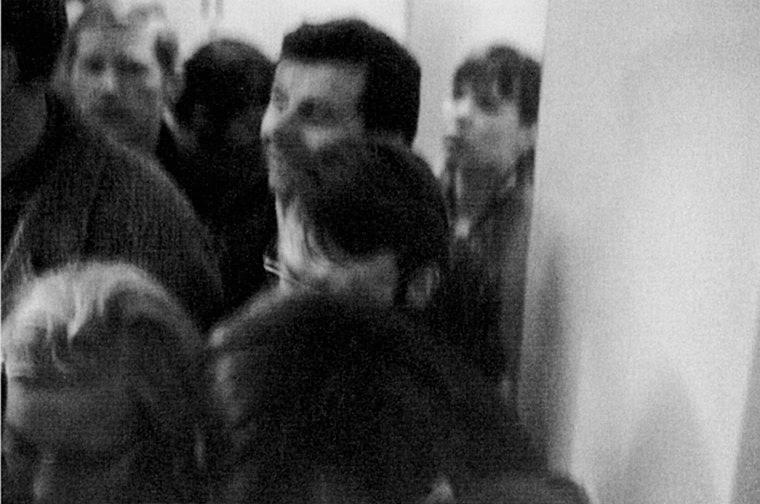
In other films in the programme, issues of queer inclusion or exclusion from space are tackled more directly. Moving from the private to the public, There is Beauty in Being Gay (1980) is a black-and-white informational documentary short produced by the Homosexual Initiative Vienna (HOSI Wien), founded in 1979. In the film, members interview passers-by on the streets of Vienna about their attitudes to homosexuality on the day before the Austrian presidential election. The interviews are intercut with shots of volunteers setting up information stands and of members explaining to the camera why civic emancipation without the liberation of homosexuality is impossible.
Depicting the HOSI’s first-ever open event and thus inclusion in public space, There is Beauty in Being Gay snapshots a significant moment in Austrian queer history. As its title suggests, it does so in a notably light-hearted and optimistic manner, balancing the seriousness of the subject matter with humorous inflections, such as adding cheerful flute music to some of the street shots. In the interviews with the passers-by, there is a similar satirical sensibility at play. On the question of whether participants would vote for a homosexual candidate, responses are notably split almost evenly between yes and no. This signals a shift in the public opinion of the time, while simultaneously exposing deep-rooted homophobic attitudes.
However, rather than confrontation, HOSI treats these attitudes with a tone reminiscent of late caricaturist and painter Manfred Deix (1949-2016), whose grotesquely distorted yet affectionate caricatures unsparingly took on the hypocrisy and double standards of Austrian petit-bourgeois society. “What kind of image do you associate with a homosexual presidential candidate?”, an interviewer asks a smiling, well-dressed middle-aged man towards the end of the film. The man immediately scoffs at the question and retorts, “How can you even ask that? He is a representative, and a f****t is an asshole.”
Sugar Daddies (Hans Scheugl, 1927)
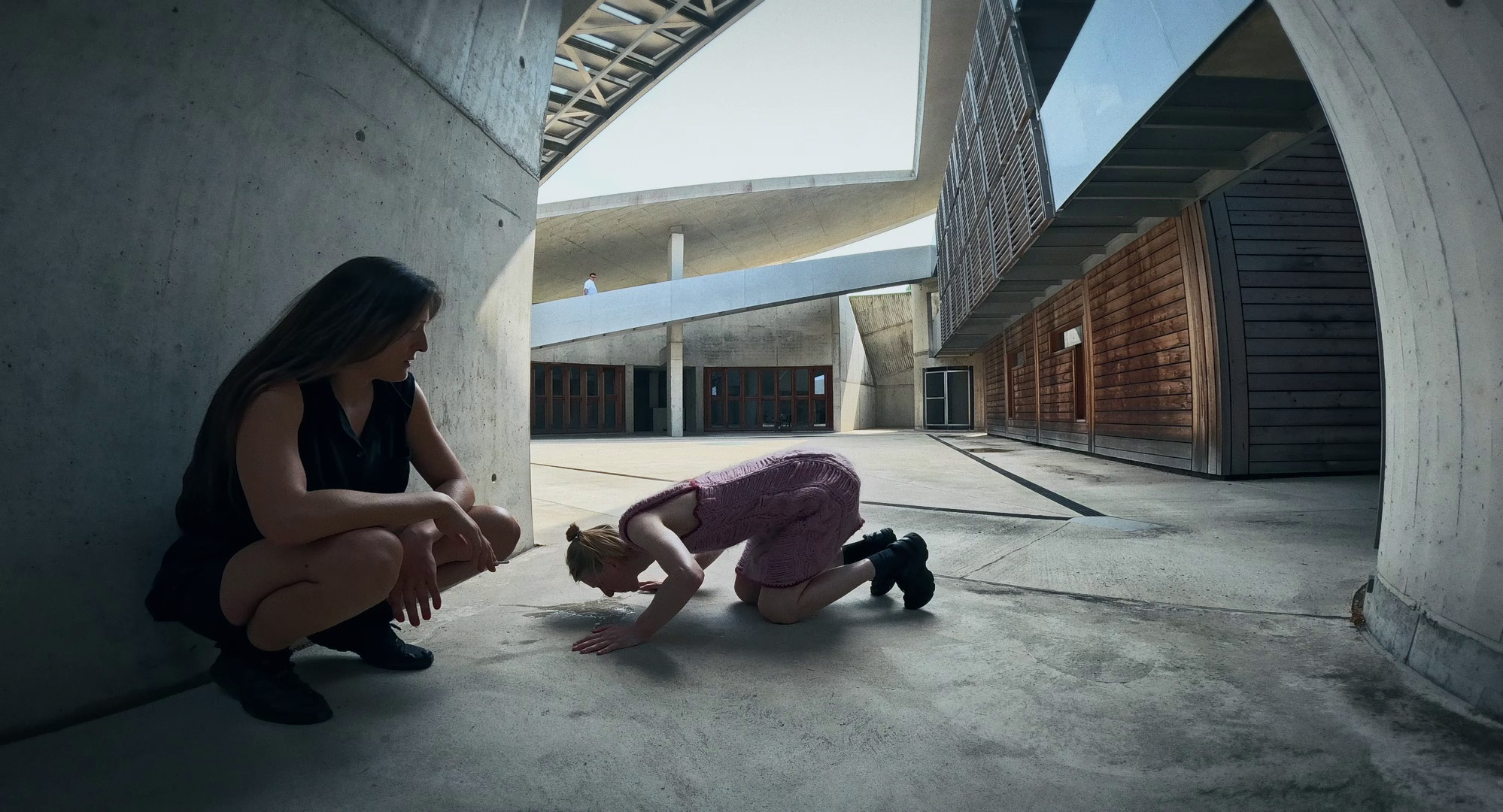
Humour is also part of an aesthetic strategy of queering in Helen Weber and Isa Schieche’s short fiction film Gay by Nature (2025), a campy dystopia with the elements of a musical. Set in the near future of 2033, it tells the story of two lesbian cat-people who escape a right-wing fascist regime conducting secret experiments on humans with the DNA of big cats. When the experiments fail and all the test subjects turn out to be large, peace-loving lesbians, the two protagonists escape their authoritarian enclosure to explore its strange natural surroundings.
The film offers a satirical take on the Heimatfilm, a popular genre in Austrian cinema (as well as in West Germany and Switzerland) from the late 1940s to the 1960s, characterised by sentimental narratives celebrating rural community life and traditional family values against a backdrop of picturesque, unspoiled landscapes. Here, nature is anything but homely, instead consisting of strange, distorted yet intimate assemblages of blooming meadows, coal pits, inner-city parks and brutalist architecture inhabited by ticks and snails, banana and plum trees.
Aesthetically, the film’s depiction of space is rendered through a decidedly queer perspective: in unexpected camera angles, extensive movement and a frequent use of fisheye lenses, whose ultra-wide-angle distortion makes the two protagonists appear larger-than-human. Adding to the film’s playfully stylised form, most of the plot is narrated through operatic song and is largely done away with early on. Then, Gay by Nature focuses on the two cat-humans as they interact with their surroundings and each other in ways that subvert the Heimatfilm’s depiction of nature as a spatial compass for heteronormativity.
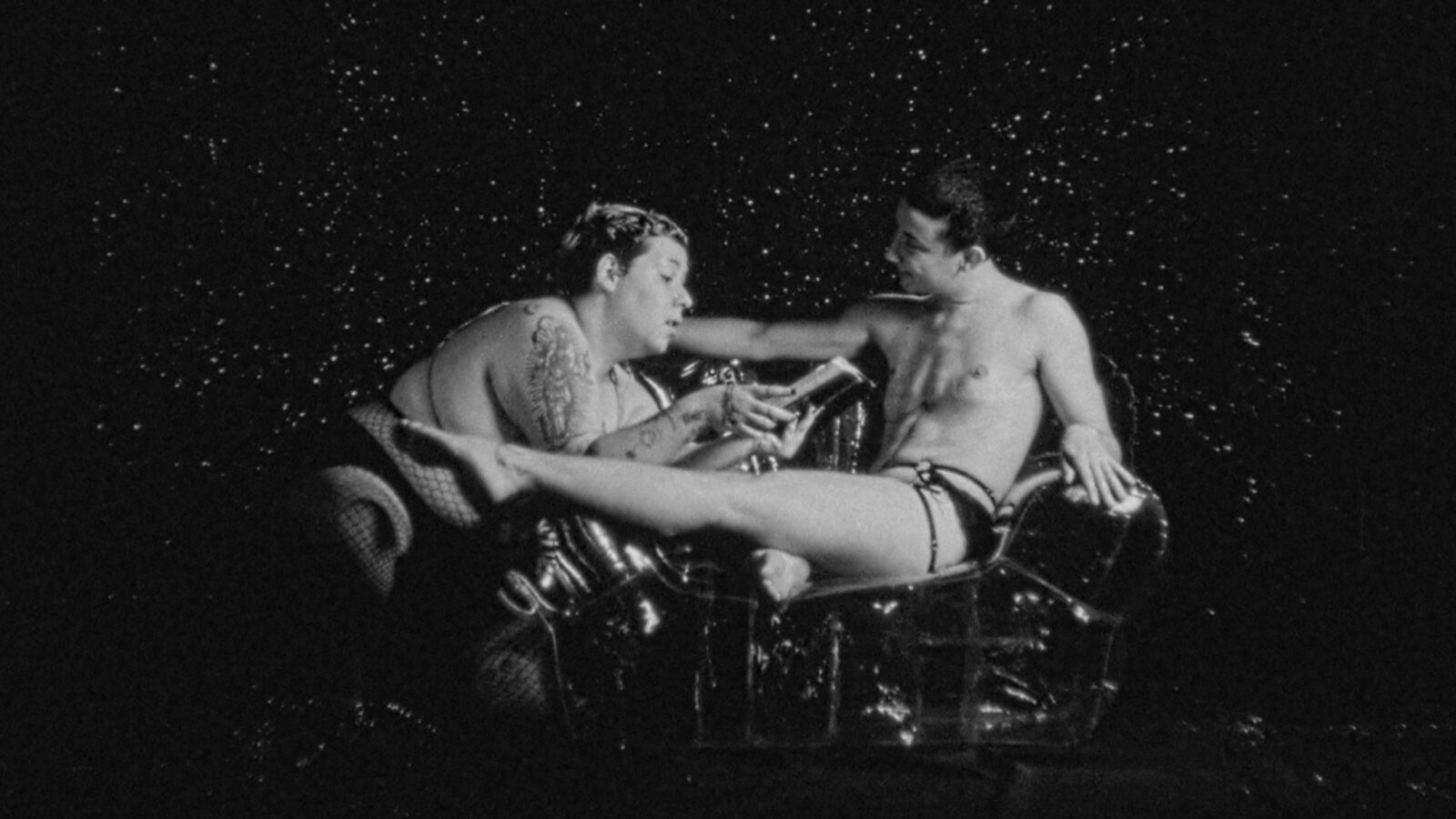
As in Weber and Schieche’s film, many of the works included in Austrian Queer Cinema extend their focus on queerness from the issue of visual representation of non-normative sexualities to a broader critique of normative social structures. In Hans Scheugl’s experimental film Sugar Daddies from 1968, which takes its name from the 1927 Hollywood film with Stan Laurel and Oliver Hardy, recordings of anonymous, often private messages written on the toilet walls in the University of Vienna are projected on the toilet walls of Künstlerhaus in Munich.
By turning the place of recording into the place of presentation, Scheugl, a key figure of Expanded Cinema in the mid-1960s and 1970s, blurs the boundaries between public and private spaces in ways that register as distinctly queer. The film reminds us how dominant social structures and systems of power have always been, and continue to be, contingent on ordered boundaries and categories of space, and on the bodies within them. At the same time, its politicised use of superimposition and projection highlights how public toilets, historically and today, represent queer spaces of intimacy, community and political resistance.
Gay by Nature (Helen Weber & Isa Schieche, 2025)
A different kind of overlay governs Johann Schwarzer’s 1908 erotic short film Im Bade, where a historically straight gaze is revisited through a queer lens. In 1906, Schwarzer, a chemist turned photographer, established the first native production company in Austria, called Saturn-Film, to make explicit content focusing on young female nudity. Taking inspiration from the then-popular erotic films by the French Pathé brothers, Schwarzer began making short clips of local female models dancing, swimming, or bathing in the nude. The films, which achieved instant success, catered specifically to a male audience attending the so-called Herrenabende–highly popular all-men’s nights in Austrian cinemas dedicated to adult films. During the period of 1906-1911, Schwarzer produced several erotic short films until the Vienna police closed the company as part of a crackdown on sexual materials.
As was characteristic of his films, Im Bade is framed as a single, unbroken tableau. A younger woman enters an elegant bathroom and, aided by her older maid, she undresses, bathes, and then finally lies down on a bed in an open robe to relax and smoke a cigarette. Curiously enough, Schwarzer was adamant that the films were not pornographic, so he imbued them with a light-hearted, humorous tone to dispel the potential luridness that erotic subject matter could evoke. In Im Bade, the light-heartedness is maintained by the cheerful mood of the bathing woman, as well as an unexpected moment of slapstick comedy when a male intruder—serving as a kind of diegetic stand-in for the voyeuristic gaze of the male audience—attempts to enter the uninvited, only to be forcefully thrown out by the resolute maid.
The film seemingly depicts bathing as an act of female intimacy and the bathroom as a private space involuntarily made public by the male gaze of the peeping intruder (and by extension, the male audience attending the Herrenabende). However, Im Bade is also a prime example of what film scholar Tom Gunning once termed cinema of attractions11 Gunning, T. (1986). The Cinema of Attraction[s]: Early Film, Its Spectator and the Avant-Garde. Wide Angle, 8 (3-4), 63-70. ↩︎ to describe the distinctly exhibitionist character of early cinema, which emphasised spectacle, performance and direct address rather than telling a story. In Schwarzer’s film, the naked female body is continuously reasserted as a spectacle by presenting it in a manner that allows the viewers a full, unobstructed view. Even as the protagonist covers herself up, the film repeatedly has her robe slip from her shoulders to re-expose her skin and draw the audience’s attention to it.
The inclusion of Im Bade in the Austrian Queer Cinema programme is an invitation to queer the film’s historical male gaze, recontextualising its pleasurable spectacle of female intimacy and nudity originally constructed for an all-male audience. Through this recontextualisation away from the patriarchal power systems that informed the film’s aesthetic and intended reception, Im Bade instead becomes about the fluid pleasures of looking and being looked at. Incidentally, the queer potential of Schwarzer’s film is explored in filmmaker Daniela Zahlner’s experimental short film SATURN RETURN, also included in the programme.
The film, which is part of Zahlner’s queer reimaginations of Schwarzer’s erotic films, maintains the visual focus on the female nude but reinterprets the choreography of bodies and desire. By levelling out the power dynamics between the two female leads—in contrast to the original film—to emphasise mutual intimacy and pleasure instead, Zahlner’s film gleefully brings the queer subtext of Schwarzer’s film to the surface. In the film’s final shot, the two women turn to the camera and smile knowingly as they touch each other’s bodies, simultaneously offering a queer critique of the production of pleasure in cinema history and sparking queer desire itself.
Through the side-by-side inclusion of Schwarzer’s original film and Zahlner’s reimagining of it, the Austrian Queer Cinema programme becomes a queer space in its own right, all the while representing the various shapes and forms queerness can take. Such a versatile selection of films, even if non-exhaustive of the archival project’s scope, illuminates the potential of moving images for creating queer spaces—not only by including non-normative sexualities but also by radically dismantling historic power structures, redefining spatial boundaries, and reclaiming the pleasure of the gaze.