
Anti-Nostalgia, a Rare Aesthetic?
Equal Dust
Despite its retro aesthetics and nostalgic Eurovision Song Contest hits from the eighties, Equal Dust ultimately stages a form of anti-nostalgia, resisting the comforting allure of the past even as it mobilises its found-footage imagery.
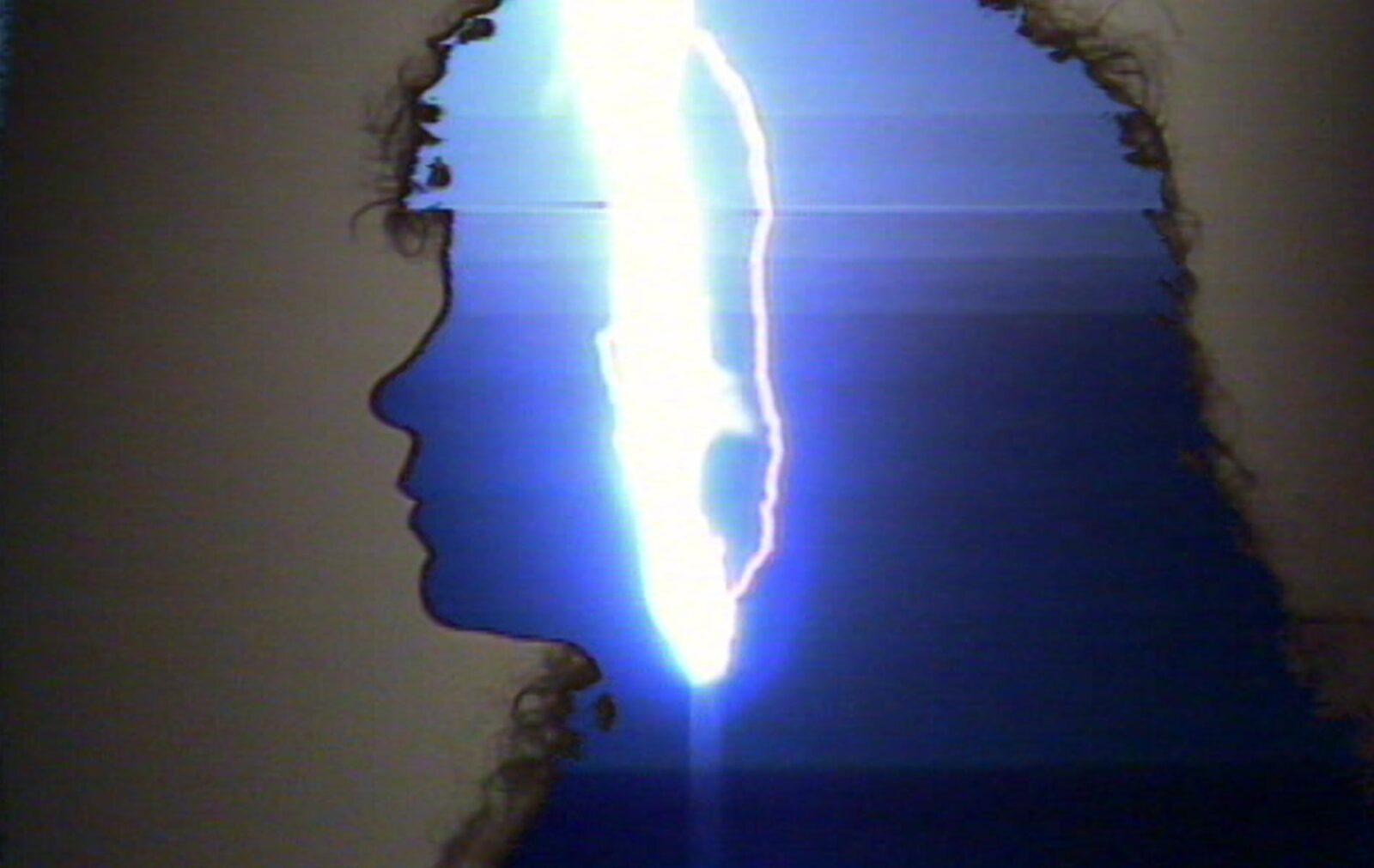
Helsinki, nighttime. A car is floating through deserted streets. As the vehicle moves forward in the darkness, we see ghostly silhouettes of buildings, street lights, and commercial neons whose distorted images seem captured in the reflection of a rear-view mirror, their lo-fi quality making them almost impossible to place in time. At first glance, Equal Dust by Jani Peltonen is a found footage film rooted in nostalgia-core. A cinematic take on the TikTok-driven rare aesthetic trend with a hint of David Lynch’s eeriness and Finnish director Aki Kaurismäki’s deadpan humour, if you will.
Through a (mostly) split-screen re-edit of an old (undated) camera test made by the Finnish Broadcasting Company (Yle), Jani Peltonen reshapes this uncanny material into an apocalyptic narrative articulated through text-over inserts placed at the center of the frame. Here, the city becomes a parallel universe of sorts, where different timelines converge towards a phantomatic apocalyptic future that never was, yet might still be, always flickering at the edges of the frame like a half-remembered dream. An impression that is heightened by the recurring use of mirrored shots in which streets and buildings morph into each other at the junction of the two screens, while the soundscape evokes the unsettling sensation of gliding through a void.
As the captions explain, the imagined scenario in Equal Dust takes inspiration from “Able Archer 83”, the 1983 pan-European NATO exercise that simulated the escalation of nuclear tensions in the last phases of the Cold War, and nearly triggered a real nuclear conflict when it was misread by the Soviet Union as a genuine attack. Drawing from this episode, Peltonen explores an alternative aftermath: a nuclear missile strike targeting a department store in central Helsinki, its shockwave engulfing the approximate area documented in the footage that forms the basis of the film.
This already dense, essayistic structure laid out in the first minutes of the film is further complicated through another layer of juxtaposition. In the montage of re-edited test footage and written inserts, Peltonen interpolates fragments from three iconic Finnish Eurovision Song Contest entries that chronologically preceded and followed the historical event at the film’s core.
In the 1982 song “Nuku pomiin”, singer Kojo serenades a perplexed international audience—the song famously earned Finland a zero points score—with lyrics warning of nuclear danger in a world that chooses to sleep through looming catastrophe. Sonja Lumen’s “Eläköön elämä” from 1985 comes across as an ode to peace, love, and understanding in a reaction to an American space missile defence system called the “Star Wars” project, designed to protect the US in the event of an imminent nuclear war. Finally, Vicky Rosti’s 1987 song “Sata salamaa” imagines a scenario in which humankind goes in search of a new planet to replace Earth.
These performances embody the quintessential Eurovision camp aesthetic—think confetti, sparkle and smoke, weird hairdos, badly synchronised choreos, and a dizzying amount of double-exposed and superimposed shots—which has come to not only define the eighties in our collective imagination, but also the identity of the Eurovision Song Contest. Through pop music and camp performances, we viewers are thus transported back to a particular time, acutely aware of how much its political tensions defined it.
However, it’s hard for a present-day audience to imagine the possibility of a nuclear war on Finnish territory without thinking about the ongoing war in Ukraine, the EU’s re-arming politics, and the strategic position of Finland in NATO’s larger geopolitical game. What makes Equal Dust stand out in a contemporary cinematic landscape supersaturated with nostalgia-driven pieces and found-footage experiments is precisely its ability to speculate on popular media’s capacity to reflect the political tensions that come to define collective memory—if not to recontextualise shared cultural codes. Or, conversely, its ability to reference these codes to deliver an even more poignant message.
By linking the lyrical content of these songs to the main text-over narrative, Peltonen creates a loose three-act structure that bounces back and forth between the real and speculative, bridging together the anxieties of the past and the present in regard to what the future of humankind might be. The film’s structure thus reproduces the recursive motion of nostalgia itself: a constant oscillation between what has been and what might yet be, an impossible attempt to drive simultaneously into the future and into the remnants of a past that refuses to stay behind.
In this case, nostalgia does not stem from a sentimental attachment to the era’s visual tropes. Instead, it emerges from the eerie recognition that history seems poised to repeat itself—much like pop hits from the 80s, 90s, or 2000s that find renewed life online as snippets for new social media trends.
Rather than simply indulging in retro aesthetics and engaging nostalgia as a sentimental mode, Equal Dust ultimately stages a form of anti-nostalgia—a mode that resists the comforting allure of the past even while it mobilises its imagery. The film’s repurposed archival footage does not invite viewers to reminisce but instead exposes the instability of memory and the unresolved fears buried within familiar cultural forms. Peltonen reframes nostalgia as a space of dissonance: the past appears not as something to long for, but as something uncanny, unfinished, and politically charged. In this sense, Equal Dust uses nostalgia not to soothe, but to unsettle—highlighting how the aesthetics of bygone decades can act as conduits for anxieties that persist across generations, and revealing how the past can haunt the present precisely when we believe it to be safely behind us.

There are no comments yet, be the first!