
Deep Listening, Quiet Defiance
Interview with Aileen Ye
With “Sounds from the Underground”, a programme by filmmaker, visual artist and curator Aileen Ye, cinema is tuned to a different wavelength. Over five films, Ye’s curation for Go Short turns listening itself into a radical gesture, exploring sound as a way to remember, resist and reach for freedom.
A powerful illustration of the sonic potential for rebellion occurred in the early days of sound recording, when pioneering musicologist John A. Lomax visited prisons in the Southern U.S. where predominantly African-Americans were incarcerated to record the “folksongs of the Negro[es].” The summer of 1933 brought him and his son Alan to the State Penitentiary in Nashville, Tennessee, where they recorded songs of incarcerated people on aluminum platters. One prisoner, John Gibson, initially refused to sing the heretical song “Levee Camp Holler” on grounds of his Baptist beliefs. Only after stern coercion by the prison warden did the man step towards the Lomaxes’ microphone, prefacing his performance with words of protest that have since been immortalised alongside his reluctant singing. The fact that Gibson’s protest is contained on the same disc as his coerced performance shows how this novel recording technology functioned as both a means of extraction and subterfuge.
Around the same time as the Lomaxes were mapping out the sonic tapestry of America, sound film emerged as the apex of the audiovisual arts. And while spectators’ unconscious bias towards the visual has often reduced sound to a relatively underexplored dimension of cinema, one could argue that its sonic aspect has historically been most ripe for political tension, especially in comparison to the more belaboured imagery that accompanies the soundtrack of a film.
It’s that transportive and transgressive power of cinema’s soundtrack that Aileen Ye sought out to explore with her curated programme of shorts for Go Short, held in Nijmegen from 7 to 12 April. Titled “Sounds from the Underground”, Ye’s programme is an ode to the potential of what she labels “sonic cinema”. In our interview just before the festival kicked off, she explains why she initially pitched the programme to Go Short: “Sonic cinema is often overlooked, while being so important to me personally.” Ye continues: “I’ve always been interested in the sensorial experience of cinema. Sound in particular can reshape the spatial design of a screening for both audiences and filmmakers. For me, sonic cinema—and this programme in particular—is about the marriage between sound and image in its most fundamental form.”
Composed of five wildly varying shorts—spanning fiction, non-fiction and experimental works that all share a defiant spirit—Ye’s programme raises the question: “What does the sound of freedom sound like?” Bookended by Malu Janssen’s historical black-and-white drama Barlebas (2024)—a depiction of the Dutch repression of women labelled as witches—and Jafar Panahi’s documentary short Hidden (2020), about a Kurdish vocalist whose golden voice has been suppressed by Iranian authorities, Ye’s programme recalls the sonic bravery Gibson displayed all the way back in 1933. In the case of experimental musical period drama Barlebas, such defiance is brought in sharp focus through its black-and-white depiction of Heylken. While awaiting her death sentence, she uses her voice to challenge the patriarchal notions of 1595, resulting in a distinctive Dutch short film that critically examines how the power structures of the past reverberate in the present.
In Ye’s words, it was Panahi’s short that was an initial building block for the programme, as a bearer of what she calls the “powerlessness of the image”. “We never see the singer. And she may never see the audiences who love her music,” she elaborates. “So all we can do is listen and feel her sorrow and pain.” As such, Hidden questions the political potential of cinema, especially when we can no longer rely on its imagery. It echoes inspiration that Ye also took from the French titan of film history, Robert Bresson. He postulated that the image tends to reproduce lies or fiction, whereas sound has the ability to produce the truth. “When these tracks come together,” says Ye about this dialectic, “the image tries to absorb truth from the sound, and the sound releases its excess reality. When this marriage works, it can produce something incredibly vivid and beautiful. That’s essentially what I mean by sonic cinema.”
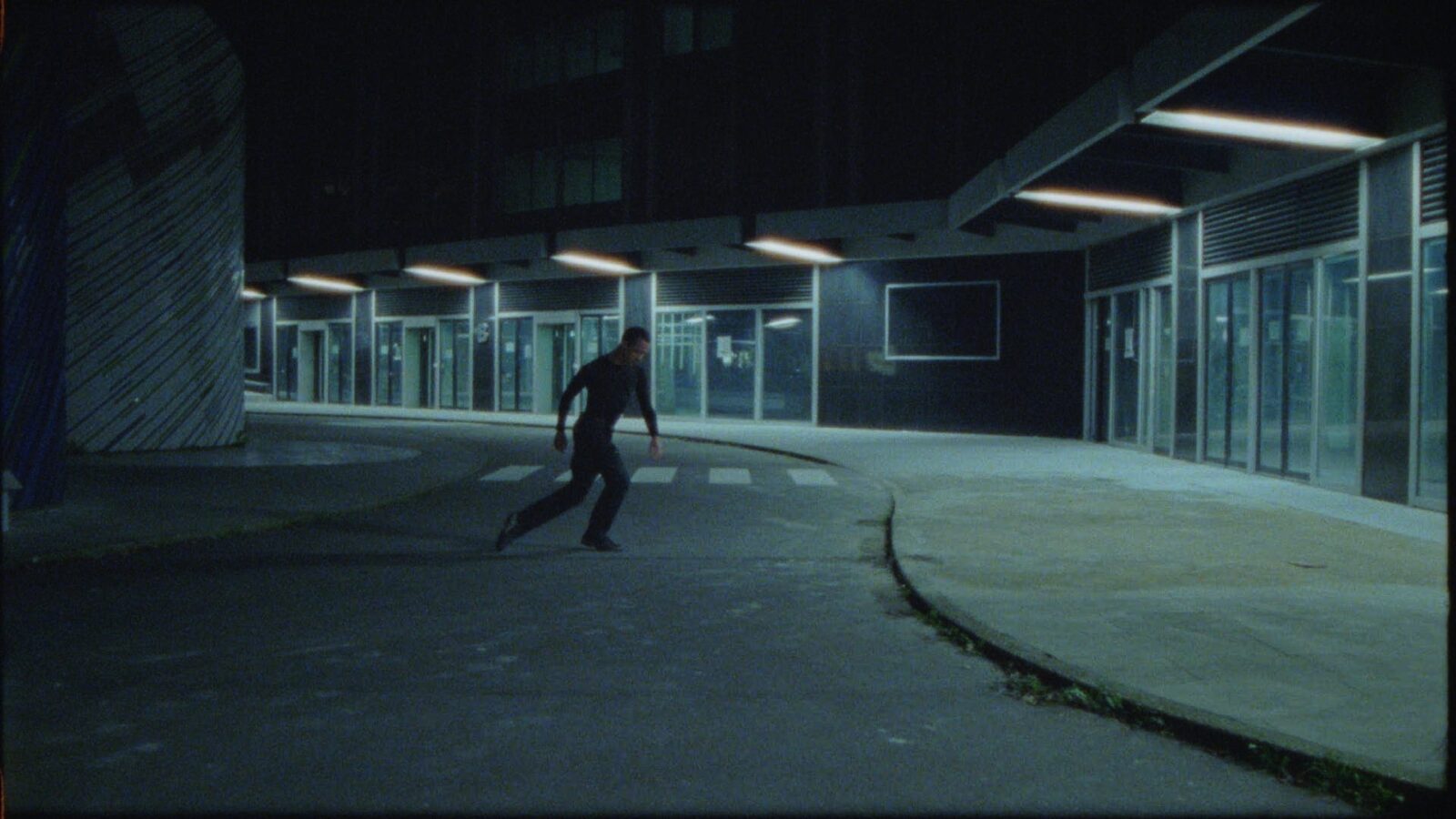
Within her own artistic practice, Ye focuses on the body as a site of resistance, using it as a critical tool to question systems of control and possibilities of defiance. All of this is amplified in her latest short, How To Dance (2025). This IFFR entry is not included in the Go Short programme, but aptly illustrates the thematic overlaps Ye explores as a filmmaker and curator, considering the highly political dance film’s focus on sound and music frames the body rebelling against a capitalist surveillance society. She describes her practice as being “drawn to what kind of physical transformation you can create within a cinema that goes beyond the cerebral, making it more embodied.”
This attraction to sonic embodiment also prompted her to include Pacific Club (2023) in the programme. Valentin Noujaïm’s documentary is an elegiac look back at the bygone titular nightclub that in the 80s served as a unique refuge for Arabs from Paris’ suburbs. Noujaïm’s film shows how these remnants of an underground culture offered a remedy for everyday life’s isolation, exclusion, and social alienation. Ye describes how “the memory of this closed club now only survives through music. The physical space may be gone—it’s swallowed whole by a new financial district—but the filmmaker can still return to it through the music that was once performed there.”
In Pacific Club, Ye sees how it “connects contemporary audiences to earlier spaces of gathering and resistance, showing how we’re still trying to forge those bonds through club culture.” The ways in which the communal experience of music can reach spiritual, near-transcendent dimensions are more explicitly evoked by Adepero Oduye’s To Be Free (2017). “It’s one of my favourite music films,” Ye states about the black-and-white short that depicts a performance of “My Way” by Nina Simone, performed in a tiny after-hours club. “When I watch it,” Ye remarks, “it doesn’t feel like a standard music video at all—it has a very different rhythm and flow. At the centre is Nina Simone, expressing heartbreak and struggle through a widely celebrated song, once popularised by Frank Sinatra. She sings it in such a broken, vulnerable way that you can’t help but feel it more deeply. While the film stays inside this intimate lounge, it reflects on all the historic events that were happening outside the space.”
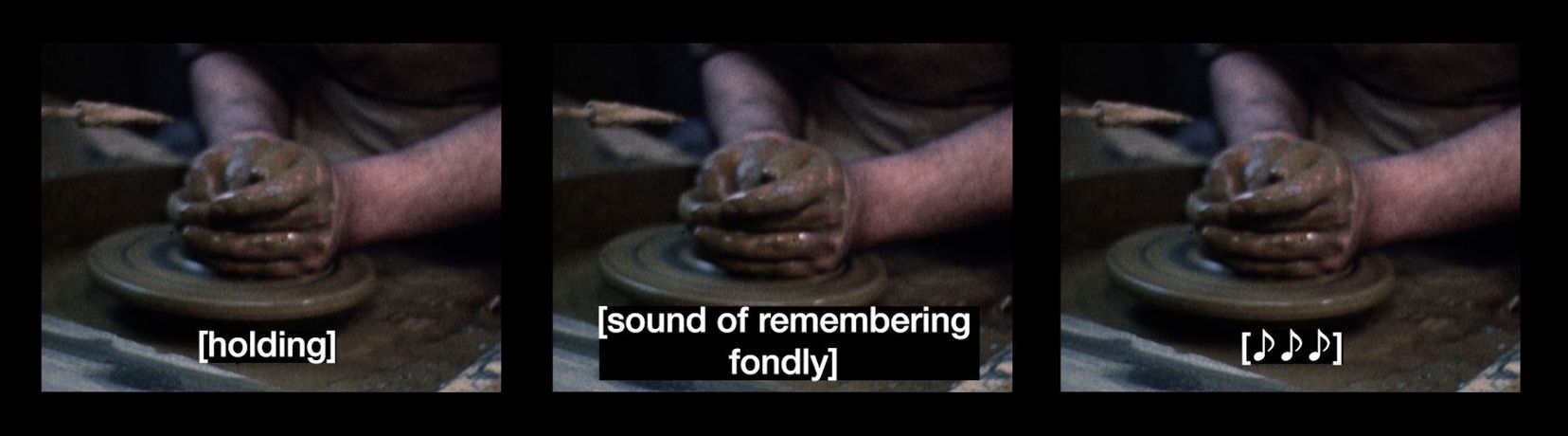
sound of subtitles (Seo Hye Lee, 2018)
This interplay between presence and absence is another leitmotif of “Sounds from the Underground” and it finds its most conceptually invigorating form in sound of subtitles (2018), made by the deaf South Korean artist Seo Hye Lee. The silent short utilises the suggestive nature of subtitles as a way for the viewer to conjure their own interpretation of sounds and events. “Instead of a collective act of imagining sound with everyone in the room,” Ye says about the unique video work, “it’s a rather solitary experience: you have to imagine for yourself what these words and images sound like within the atmosphere.” For Ye, the film reveals the power of silence in cinema. “Something that often makes us uncomfortable, as if we constantly need sound or action to carry the story. But silence itself can become a storytelling force. Just like Beethoven was deaf and composed and heard music in his mind, the audience of sound of subtitles composes its own music internally.”
Inspired by another hero of Ye’s, this collection of shorts offers viewers and listeners a chance to practise the concept of “deep listening” in the cinema, as it was formulated by American avant-garde composer and pioneer of electronic music Pauline Oliveros. “She distinguished between hearing and listening,” Ye explains. “Hearing is passive: we hear in order to recognise patterns we already know. Deep listening is active and intentional—a way to understand the entire world around us. For me, deep listening shapes the entire atmosphere of the image.” She hopes that people feel something different—psychologically and physically—when they experience these films, and not just remain in a more rational and cognitive mode. As diverse as her programme sounds, Ye feels that the films that cross different historical and geographical contexts share “emotional evocations that live within us.” As such, she aims to “unite the audience in how we respond when we listen. There lies a collective imagery and imagination that forms beyond visual language.”