Flowers Left in the Archive
Sabrina Rose unravels the responsibilities filmmakers have when excavating colonial archives, allowing images born of a violent gaze to speak differently.
“Colonisers write about flowers… one day, I’ll write about the flowers like we own them.” — Noor Hindi
The flowers, as witnesses to the hands that plucked them. It must have felt strange to them, this touch, this gaze—not admiration, but something else, something cruel. The land itself holds memory of this encounter, still asking: what is this fascination with flowers that you have?
To pluck a flower is to take something from where it belongs and place it somewhere else. Images can travel in the same way. They are gathered, stored in archives, and returned years later to be looked at again. But what does it mean to revisit images made under a colonial gaze?
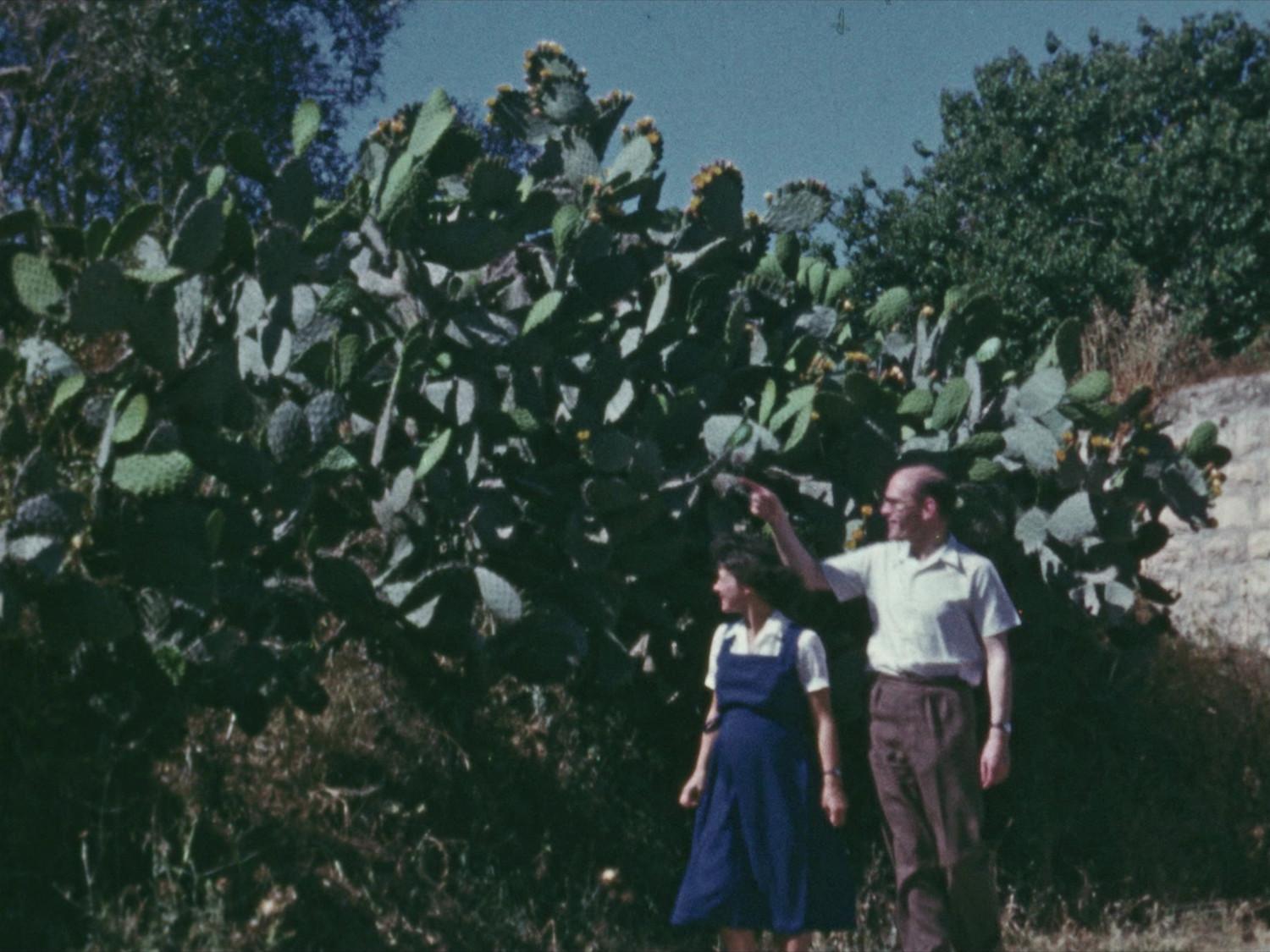
Somewhere in a cinema in Eastern Europe, I too became a witness, sitting with the flowers and their memory. The boundaries were blurred, the safety of the world around me shattered, and I could only focus on the part of the world where I come from, where many of my friends come from, where people’s lives are as fragile as flowers. The film—a home movie shot in the 1930s–40s Palestine—had sat silently in the archive for decades. A father, a mother, a baby smiling at the camera. A family documenting their vacation in a land with pretty flowers. Innocent images, if you don’t know the story behind them.
The Flowers Stand Silently, Witnessing (2024) was screened at the 19th Vilnius Short Film Festival as part of the “Spirits Among Us” programme. At first, it looks like any other home movie, with visitors strolling through the fields and picking flowers. The images are beautiful, almost peaceful, but there’s an underlying violence to them. A Scottish missionary filming in a land that was not his, capturing people who had no choice but to appear in the frame. You barely notice them at first, because the tourists dominate the image. Then the footage pauses, freezing on these blurred faces, and we start to look closer. A child holding flowers, a woman smiling back at the camera, walking through the same fields. People on camels going about their day. In the original footage they were treated as scenery, but the intervention lets their presence settle in the image. It feels like we are examining the archive alongside the filmmaker, noticing the lives that were always there but went unnoticed.
The footage is among the earliest surviving colour images of Palestine on film—fragments of a place held in rare material form. Access to these images is itself a privilege. For filmmakers who grew up away from the land where these images were filmed, returning to them through the archive becomes a way of looking back, of trying to understand what was left behind. They can revisit the footage, annotate it, and talk back to it (something the people who were filmed never had the chance to do). Because of this, archive-based filmmaking often overlaps with the video essay form, where the filmmaker’s own voice becomes part of the work. But how much intervention is needed in a film made entirely from found footage? Do we need to explain what is happening in the frame?
The on-screen text sometimes reads like a diary, sharing the filmmaker’s reflections as they engage with the footage. At times, it grounds us, placing the images in a personal and historical frame, as in: “Images of a land my grandparents were born in, grew up in, and later were forced out of.” But in other moments, the text competes with the images, diverting attention away from what is already there. The camera captures fields dappled with sunlight, flowers in full bloom, and women in sundresses moving through the space. The trees holding their ground, a river winding in the distance, the sun settling behind them. Then the faces in the background are zoomed in on. We also see the silhouette of the person filming, their shadow casting over the red flowers. When words appear over these shots, such as “these images of flowers legitimised power over others” or “a ghost from the future,” the text sometimes overshadows the footage. For images this loud, sometimes mere silence is enough.
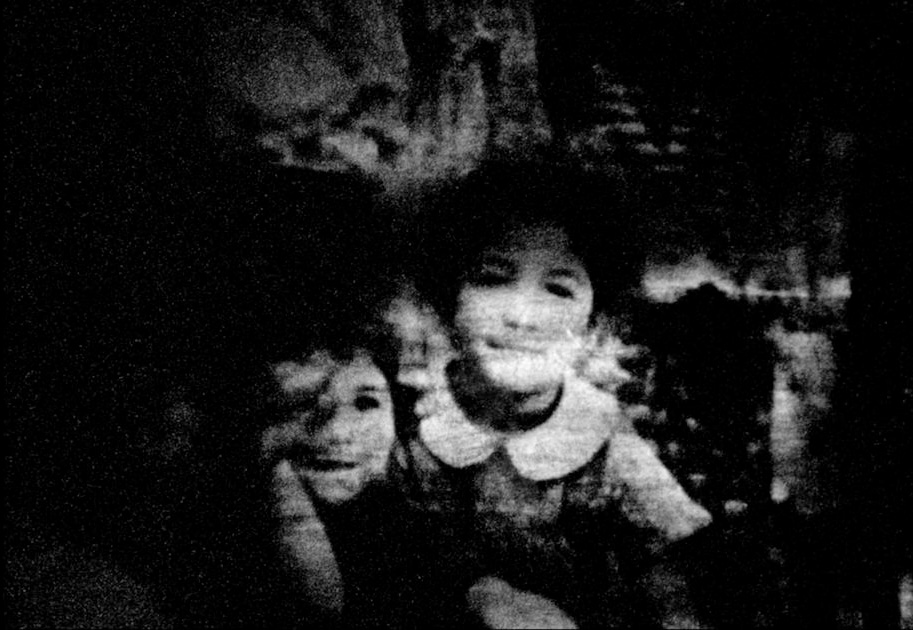
O, Persecuted (Basma al-Sharif, 2014)
When we return to the archive, we are not just looking at images—we are exploring what they show, what they hide, and the histories they carry. Filmmakers and artists with access can look beyond the details, pause, slow down, or rearrange sequences, finding new ways to see and hear. In this process, the images themselves take on a life of their own, shaping how we remember, how we connect past and present, and how the subtle, often unseen details of the frame begin to matter. As Susan Sontag wrote, photographs do not simply record reality; they participate in it, guiding what we notice and how we understand the world. Similarly, Harun Farocki’s practice shows how interventions with archival material can reveal systems of control and the silences embedded in the archive itself. In I Thought I Was Seeing Convicts (2000), he juxtaposes prison footage with computer simulations, highlighting the conditions under which the footage was constructed and circulated.
The archive then becomes a meeting point between those who recorded, those who were recorded, and those who return to look. The celluloid itself carries traces of what was filmed and what was left out, and those traces shape how the past reaches us in the present. In this sense, every frame holds a kind of “robbed shadow”, the presence of people and moments erased or captured under unequal power, glimpses of lives that were never fully allowed to appear. There is still so much our eyes cannot see: the hands that held the camera, the choices behind where it was pointed, and the lives unfolding just beyond the edge of the frame.
It is this attention to what remains unseen, overlooked, or pushed to the margins that also shapes the work of Basma al‑Sharif. Rather than treating the archive as something to simply restore, her films return to its fragments and sit with them. In O, Persecuted (2014), she works with footage from the Palestinian militant film Our Small Houses (1974). The visuals appear only briefly (shadows, silhouettes, and fragments), while the sound remains direct and unflinching. It feels almost as if the film is refusing to show everything, as though we have already seen enough of the violence and the image no longer needs to prove it. There is a kind of rage and resistance in this choice, a reaction to both the footage and the ongoing genocide in Palestine and South Lebanon.
The haunted fragments from the militant film are set against bright screen recordings of Tel Aviv parties, filled with music, colour, and movement. One set of bodies remains confined to violence and absence, while the other moves freely, visible and loud. Placed side by side, these realities expose the uneven ways some lives are seen, remembered, or ignored. The archive becomes a space where distant viewers engage with histories they did not live through, while also confronting the uneasy position of witnessing suffering from afar.
A different approach to returning to the colonial archive appears in Sandhya Suri’s Around India with a Movie Camera (2018). Working with footage from the BFI Archive—travelogues, amateur films, and fragments of everyday life recorded across India under colonial rule—she pieces the material together in a way that asks us to look more attentively. In one moment, from footage of the Delhi Durbar (1912), Indian rulers approach the British monarchs. They are expected to bow, but one man simply walks past without acknowledging them. In the original footage, this act of refusal (or resistance) could easily pass unnoticed. But in the film, it becomes impossible to ignore as the editing gives it center stage. In another scene, a Salvation Army worker forces an Indian woman to remove her jewelry, stripping away markers of identity in the name of conversion. The moment is slowed down, as if asking the audience to sit with their discomfort.
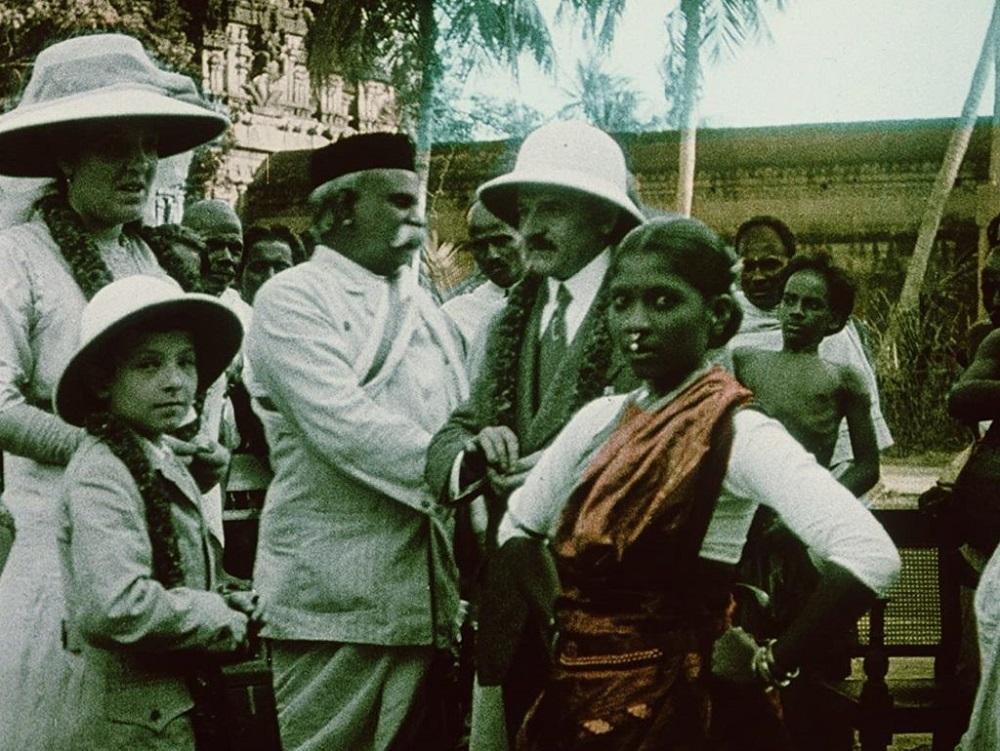
Around India with a Movie Camera (Sandhya Suri, 2017)
Working with images born of a violent gaze and letting them speak in a new way is a responsibility. It involves attending closely to what the footage contains, highlighting what is wrong, and negotiating it through editing, sound, or sequencing. Filmmakers revisit images made under colonial conditions, finding ways to respond and assert a perspective that wasn’t possible when the footage was first made. And still, access to these images is uneven. The paths through archives are not open to everyone, and this imbalance repeats the power structures that originally produced the material.
Theo Panagopoulos, for example, discovered the footage that became The Flowers Stand Silently, Witnessing almost by accident at the National Library of Scotland. Watching the reels, he has described feeling as if he were looking at his own family history, faces that might have been relatives, streets and fields still existing just outside the frame. But this encounter with the material usually has to pass through the archive’s rules, permissions, and limitations.
Engaging with archival material puts filmmakers in a complex relationship with the images and the systems that preserved them. Their work carries urgency, offering a way to talk back to images that once surveyed their homelands from the outside, but the very ability to access these archives gives them the power to search, digitise, handle, and re-edit the material. This very positionality also highlights the unevenness of the (Western/colonial) archive. What survives has been selected and preserved by missionaries, colonial administrators, and travelers who often barely understood the lands they filmed. While those recorded rarely had a say in how (or if) they would be remembered. Today, these films rest in vaults, thousands of kilometers from the lives they depict, often outlasting generations of the people themselves. Preservation ensures these images survive, but it also reflects the choices and authority of those who maintain them.
Watching these films made with colonial footage, we step into a space that the original camera never allowed. We get a chance to pause, to linger, to notice what was always there but rarely seen. The colonial gaze once reached outward, tracing other lands. Now, through archives, festivals, and screens, it comes back to haunt us. Resistance lies in subverting the context by questioning the details; asking who was behind the camera, under what conditions they filmed, and whether the people in the frame were recorded willingly or against their will. It’s in letting the images unsettle us, making us question our own position and asking, are we looking at these people on screen as ‘others,’ or as people like us?
Are we in a comfortable cinema far from the events on screen, and then leaving the room unchanged, or are we carrying what we saw with us, learning, reflecting, paying attention to the world beyond? Cinema doesn’t end when the lights come on. Its power stays with us, and for our gaze to be responsible, it has to travel beyond the screen, asking how we watch and what we do with what we see. Even without changing the footage, the act of looking carefully, critically, and attentively can challenge the dynamics that first produced these images and become an intervention in itself.
One day, the flowers might be written about as if they truly belonged to the land where they grew, not merely through someone else’s eyes. Like the images themselves, they carry remnants of beauty and violence, of being alive on film but absent in reality. The past cannot be undone, and the image cannot be purified, but returning to it allows us to look again and to question what it shows, what it hides, and whose histories were left outside the frame.
This text was developed during the European Workshop for Film Criticism #8—a tandem workshop set during Kortfilmfestival Leuven and Vilnius Short Film Festival—and edited by tutor Michaël Van Remoortere.
The European Workshop for Film Criticism is a collaboration of the European Network for Film Discourse (The END) and Talking Shorts, with the support of the Creative Europe MEDIA programme.