“Making films should be as easy as breathing.”
Apichatpong Weerasethakul sat down with Talking Shorts for an interview to discuss an often underexplored facet of his oeuvre: the more free-spirited and playful experimentations in his short film work.
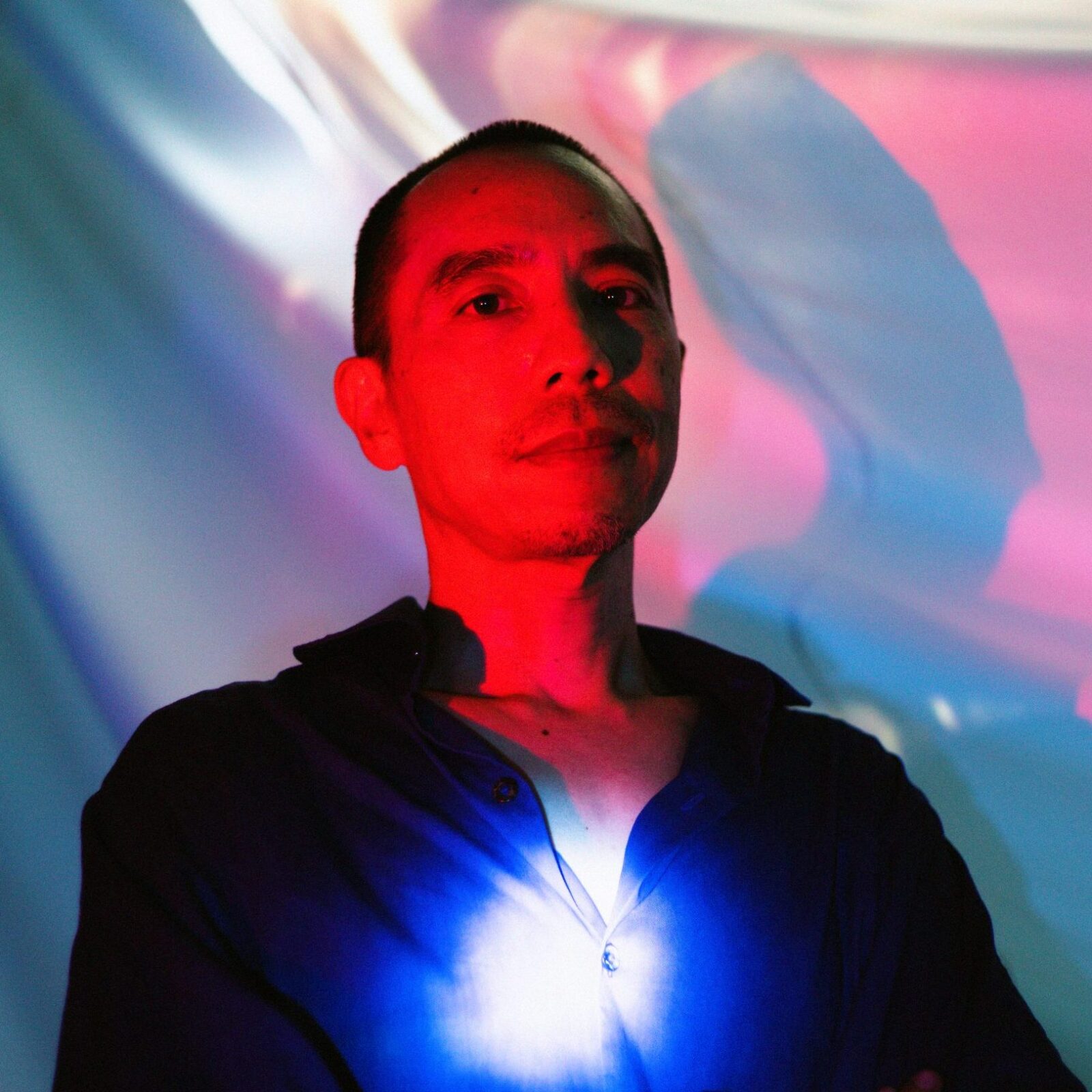
Ever since breaking through with highly distinctive feature films at the dawn of the 21st century, multi-disciplinary artist and filmmaker Apichatpong Weerasethakul has become near-synonymous with what we might call “slow cinema”. That cerebral label, however, has never felt adequate enough to describe the radically earnest and profoundly haunting films of the Thai director, as few contemporary filmmakers have filtered their immediate surroundings through such an astute personal sensibility. Weerasethakul manages to steer his feature films, such as Golden Palm-winner Uncle Boonmee Who Can Recall His Past Lives (2010) and the Tilda Swinton-starring Memoria (2021), towards a kind of cinematic fugue state, striking a delicate balance on the event horizon between the physical and the supernatural, the corporeal and the spectral.
While mostly renowned for such poetically-charged features, Weerasethakul is also a prolific director of about fifty short film works, in which he often showcases a more playful approach to cinema. In contrast to the features, his shorts are relatively more scrappy. Many of them are shot on cheaper digital cameras, allowing the director to explore more radical approaches to stylisation, embracing the inherently poor images of low-resolution digital film. One of the most striking examples might be Nokia Short, commissioned in 2003 by the once ubiquitous phone company after they launched their first cellphone with video recording capabilities. Here you can see Weerasethakul messing around with pixels as building blocks, visibly relishing the shortcomings of the camera.
It was exactly this short—nowhere to be found on the internet—that triggered Dutch experimental filmmaker Bram Ruiter and myself to programme a block of Weerasethakul’s short films in Amsterdam’s Eye Filmmuseum. As the director was recently in Amsterdam to attend the opening of Eye’s exhibition Tilda Swinton. Ongoing., we finally managed to sit down in the lobby of his hotel to expand on how short films actually factor into his work as a filmmaker.
Let’s start with Nokia Short. What was it like to have a major company commission you to shoot on their novel videophone?
Back then, things weren’t as blatantly commercial as they are now. Of course, big companies, including cell-phone brands, were gaining huge traction, but it wasn’t anything like the calculated PR we see nowadays. Nokia didn’t really overthink their branding or anything like that. It was more about their excitement to share this new technology with someone capable of shooting movies with it. This was also around the time I started making these types of digital short films. I was mostly focused on shooting on film before that. I had studied film in Chicago, where film and digital were considered quite separate things. That made me curious about working with digital. To this day, I’m really happy to have had the chance to explore all of these different mediums and formats. I wish I had kept that phone by the way—it’s such a classic now.
It seems like shorts are more like a playground for experimentation for you, while your feature films communicate a more rigorous and exacting vision. How do you see that relation between long-form and short-form cinema within your own practice?
You’re right that this mobility and affordability stimulate experimentation. I think short films allow you to engage more playfully with your environment. It offers a different way to express what you see in the world, which I find very pleasurable compared to feature films. Those evoke a more intellectual and cerebral type of pleasure, as you think more deeply about time, shape, and form. For me, short films are mostly about process. It’s a personal process, a conversation between the camera and me.
You also find poetry in employing cameras that aren’t state-of-the-art. What does it mean for you to embrace such broken or poor images?
I was always very focused on the materiality of cinema. I had a background in shooting on film, starting with Super 8 and then on 16mm. So, I know what it’s like to work with the fragility of chemical processes, treating each frame as carefully as you could. At that time, I didn’t pay much attention to scratches or dirt. I didn’t see them as defects or imperfections, but rather as part of the cinematic experience itself, as there wasn’t any digital technology to erase them. We can extend this idea of looking at artefacts and defects as an inherent part of the material itself—and not as a weakness—to how I work with that early Nokia phone or with other lower-resolution cameras. You see how the camera sensor struggles to process lights and calibrate itself. For me, that’s what makes the experience so wondrous.
So how does the narrative connection between some of your short films and their feature counterparts work? For instance, the short A Letter to Uncle Boonmee (2009) complements Uncle Boonmee Who Can Recall His Past Lives (2010) by expanding on the world-building, mythology and backstory of the feature.
A Letter to Uncle Boonmee exists within a larger collection of works related to memories of the land where I grew up. It was one of the earlier projects of mine that felt so enriching to make. It made me realise I was really into processing thoughts and feelings, rather than rushing towards the final product. Making this film was a journey into itself. It was also one of the early projects where, in order to make a feature film, the producers creatively approached various art funders, making it possible to have all of these tiny satellites orbit around a bigger one.
I see Uncle Boonmee Who Can Recall His Past Lives as a manifestation of a myriad of processes that are all part of the same project. It consists of multiple components, including many shorts and diaries. A Letter to Uncle Boonmee was one of them. I didn’t really know what that film was going to be about. I was just fascinated by the area, the architecture, and this former communist village. There are also locations like the Mekong River to which I feel an inexplicable attraction, wanting to capture the changes in it. I kept recording, trying to gather portraits of the houses there, the voices of my own memories and the thoughts of the young people there.
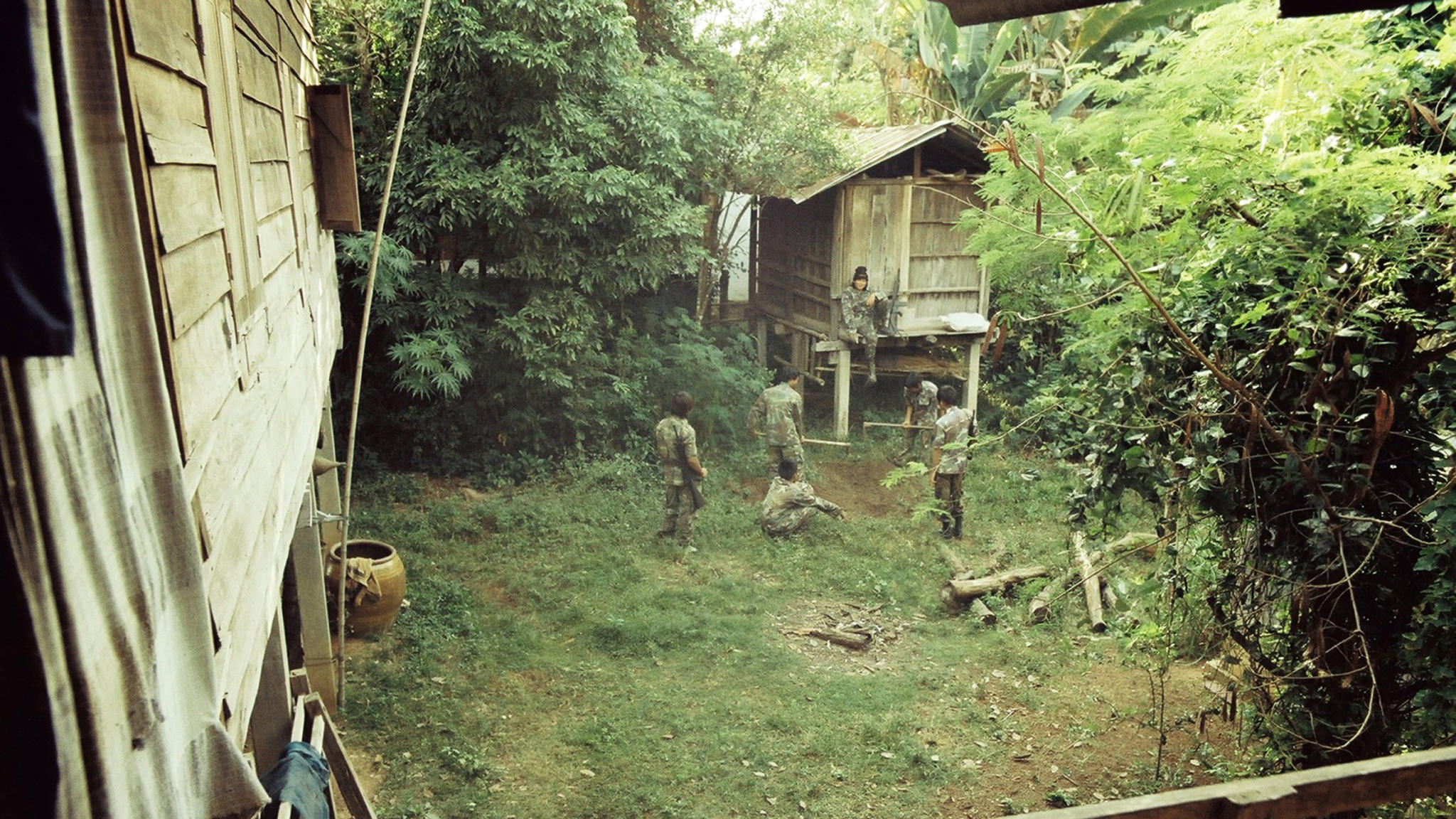
© A Letter to Uncle Boonmee (Apichatpong Weerasethakul,
You seem to collect a lot of imagery, stories, and fragments of memories. Did you always feel this impetus to record your surroundings?
I never thought about it consciously. I would say it’s the other way around: filmmaking made me embrace narratives and encounters. I started with collecting these little notebooks and continued by writing down dreams and diaries. I think it also has to do with the fact I have a faulty short-term memory and tend to forget things quite easily, so I need to write them down.
Your short film Rolling (2015) breaks away from what most might consider a Weerasethakul film. There is this exciting interplay between words on screen, between dreams and images, while having this rough found-footage feel. Can you talk a little more about its creation?
That was one of the videos I made as a cinematic New Year’s card to people.
Excuse me? This is news to me.
Yes! I was inspired by a friend of mine, a French artist who creates one-minute clips as yearly greeting cards. I started doing that years ago, but I stopped at some point. Rolling is one of those living pieces, reflecting dreams that keep coming back to me—dreams about dogs and the cycle of life. I guess I stopped making them because it became too easy with all the advancements in phone technology. When there weren’t any obvious apps for recording and editing audio and images, the effort was more rewarding. For me, that was a labour of love to share with people. Nowadays, sending clips and images to loved ones is so easy that it doesn’t feel quite as special anymore.
Does it worry you that our relationship with the moving image, and by extension cinema, is over-commodified to the point of demystification?
It’s just not that special to create anything anymore. I can only speak to my own perspective, coming from a time when it was harder to achieve things, just around the time when analogue was disappearing. The newer generation doesn’t feel that way; for them, moving images are abundant, like the air we breathe. I do still value images, especially when you can see the craft of them. It’s perhaps an old-fashioned way of looking at images, but that’s just me. I guess, my generation is limited in that way. That’s also why I insist on shooting on film now, not only because it’s beautiful, but also because the process entails a ritual.
Besides Nokia Short, various other projects of yours have been commissioned by major brands and institutions. How do you strike the balance between commissioned work and fostering your own creative freedom?
Most of these projects that come my way actually allow for a bigger degree of freedom. I already have an archive of notebooks filled with ideas, meaning I can always fit something into what they want without any compromise. If there is a compromise, it’s mostly regarding length.
It’s a bit ironic that your production company is called “Kick the Machine”, since film production is a machine that needs to keep running. I imagine your short film work helps to keep this machine alive.
I always say making films should be as easy and natural as breathing. Once it becomes an effort to create, it becomes a chore and can lead to stress. Filming should feel organic, like writing something down or remembering something. That’s why I don’t understand why so many young filmmakers exclusively want to make feature films. For me, that just feels stressful. But I guess that ties into what we see as the definition of success, which often requires money and recognition for survival. I’m lucky to have a successful career, which also allows me to be very precise in the way I want my short films to be exhibited. I usually curate the short film blocks that are being screened in cinema’s myself, as I believe audiences should share this experience in the correct sound and image context.
When compiling these shorts in a programme, do you also consider the emotional throughline between them?
It actually surprises me when people relate to my films deeply or have strong emotional responses to them, because they are so personal. They reference specific circumstances, people, and locations. They embody a kind of childlike fear. Sometimes they don’t even need a defined narrative—just a situation, mood, or texture.
And still, there are few directors working right now who use cinema so effectively to reflect on elemental notions of living and breathing.
The work itself reflects that honesty. For me, it’s crucial to be genuine because this is the only medium I feel connected to. You create your worldview and sensitivity through the medium you choose. For instance, I don’t consider myself an activist; I don’t attempt to change the world with my films. I’m more concerned with expressing myself as a human being. Creating empathy and a range of emotions stems from this authenticity far more than merely telling others what’s right or wrong.
You noted your desire to keep returning to the Mekong River to capture its changes. Isn’t this somewhat ironic? Isn’t a river defined by its constant change and flow, making it impossible to capture all its movements?
You’ve hit on a vital point. Everything is in motion, so why do we need to record? I once created an installation that asked audiences why we need to record. The ideal is to let things flow. In that sense, filmmaking is an antithesis to living, since it ties you to memory and time. I guess it’s my karma to keep recording; until the desire to do so fades, I will continue. Even though I stopped watching films almost ten years ago, I still want to make them.