Sonic Relics
Diegetic Sound in Film
Tianyu Jiang makes a case for the use of diegetic sound in film. “It exposes a deeper truth that the image fails, avoids, or refuses to disclose.”
I bet I’m not the only one who could sometimes use a “mute” button in real life, when the score of a film starts to get overly dramatic. But it is not complete silence I wish for; instead, in those cases, I’d want to peel off the musical additives and expose myself to the innate rhythm of the moving picture before me. A realisation occurred to me while watching the International Competition programmes of the Vilnius Short Film Festival in January 2025: I find the resonance between myself and a film grows naturally when I am immersed in the same soundscape as the characters on screen.
In Daniel Soares’s short Bad for a Moment (2024), for example, watching a group of architects smash abandoned cars in their team-building exercise means also hearing all the guttural rumbles, mixed with the sound of crowbars and hammers colliding with metal and glass windows. All these sounds are evocative enough for me to not only imagine, but also relate to the pleasure these characters take in destruction.
Sound originating from within a film—the so-called “diegetic” sound—has long since been pulling the strings, intertwining audiences with the world on screen. In feature-length films, there is comparably a more spacious ground for the sonic fabric to stretch over, which makes it easier for sound to lead the story in a decisively upfront way, as in Francis Ford Coppola’s The Conversation (1974) or Brian De Palma’s Blow Out (1981). In short films, however, there is a challenge posed to sonic compositions: to reach the equivalent thrill, as in both a durational and escalating way. While musical score layered atop can risk coming across as manipulative, diegetic sounds—if thoughtfully designed—can captivate the viewers more directly. We see “this” and hear “that”. We see “this” but hear “that”. Is there a rule as to when one becomes aware of a short film’s sonic elements?
Just as I was about to be convinced that a collective smashing of car remains might actually be a fun thing to do with fellow colleagues, Bad for a Moment directs my attention to an alarm sound, echoing in the distance, as it faultlessly vibrates with the rhythmic thuds of the co-workers’ rage-relieving actions. What’s puzzling is that even though everybody on screen is wearing helmets, gloves, goggles and boots, these precautionary visual cues cannot explain the concurrent warning signals. Something else is going on, simultaneously. I see the cars getting wrecked but I hear the alarm from afar, way before its source is revealed—the Tesla car belonging to the manager (Adriano), getting a similar teamwork treatment from a group of teenagers. After Adriano turns the alarm off, another sequence of sounds sets off. We hear (and see) his already wrecked car crashing into a bike, splintering cracks, and a growl, together almost resembling the cacophony of the prior scene of “harmless fun”. The power dynamics between consumers (the architects) and residents in this soon-to-be-demolished neighbourhood are made parallel through sounds of destruction, as well as the short’s verdict on the ethical complexities of gentrification.
Similarly, Guil Sela’s Paris-set short film Montsouris Park (2024), included in the same programme called “Urban Stories”, also uses diegetic sound to highlight the interconnectedness of strangers in public spaces. The eponymous Montsouris Park presents a lot of options for a scene compelling enough to make into a documentary, and in the short’s beginning, the boom operator Nathan waves his mic according to the directions of his cameraman Jacques (portrayed by Sela himself). We hear animals squawking, the rustling of autumn leaves, and some barely audible conversation from afar, as if it were a real-time recording and we were there ourselves. But the film’s “meta-” script is more than just a gimmick—it further complicates the relationship between sound and the constructed immersion it creates. We have the dialogue between Jacques and Nathan, with all the background noise captured by the boom mic as the latter scoots around. While the audience gets to enjoy the filmmaking process immersed, but from a safe distance, Jacques says, “We are violating their intimacy, unethical!” as he zooms in and out of the sight of a couple kissing.
However, the camera half of the creative pair is not the only outlet conducting observational pleasure, with sound being the other indispensable piece of the puzzle. When the camera fixates on a scene that would eventually unfold into a woman stealing a man’s electric unicycle by “trying it out,” the conversations preceding the theft, once recorded amidst the natural soundscape, already turn into evidence. Unexpectedly (and rather anticlimactically), the victim laughs the whole thing off and convinces his friend to move on. This humorous take on one’s misfortune unfolds in parallel for Jacques and Nathan, as we hear their reflexive words—blended with the cheerful screams of the nearby kids—as they walk away from the scene. If the sounds of destruction enabled the characters of Bad for a Moment to meet, the park noises—a setting which organically encourages mumbles and talks of wisdom—provide the perfect sonic base for social interactions and unpretentiously showcase Sela’s appreciation of the small surprises in the mundane.
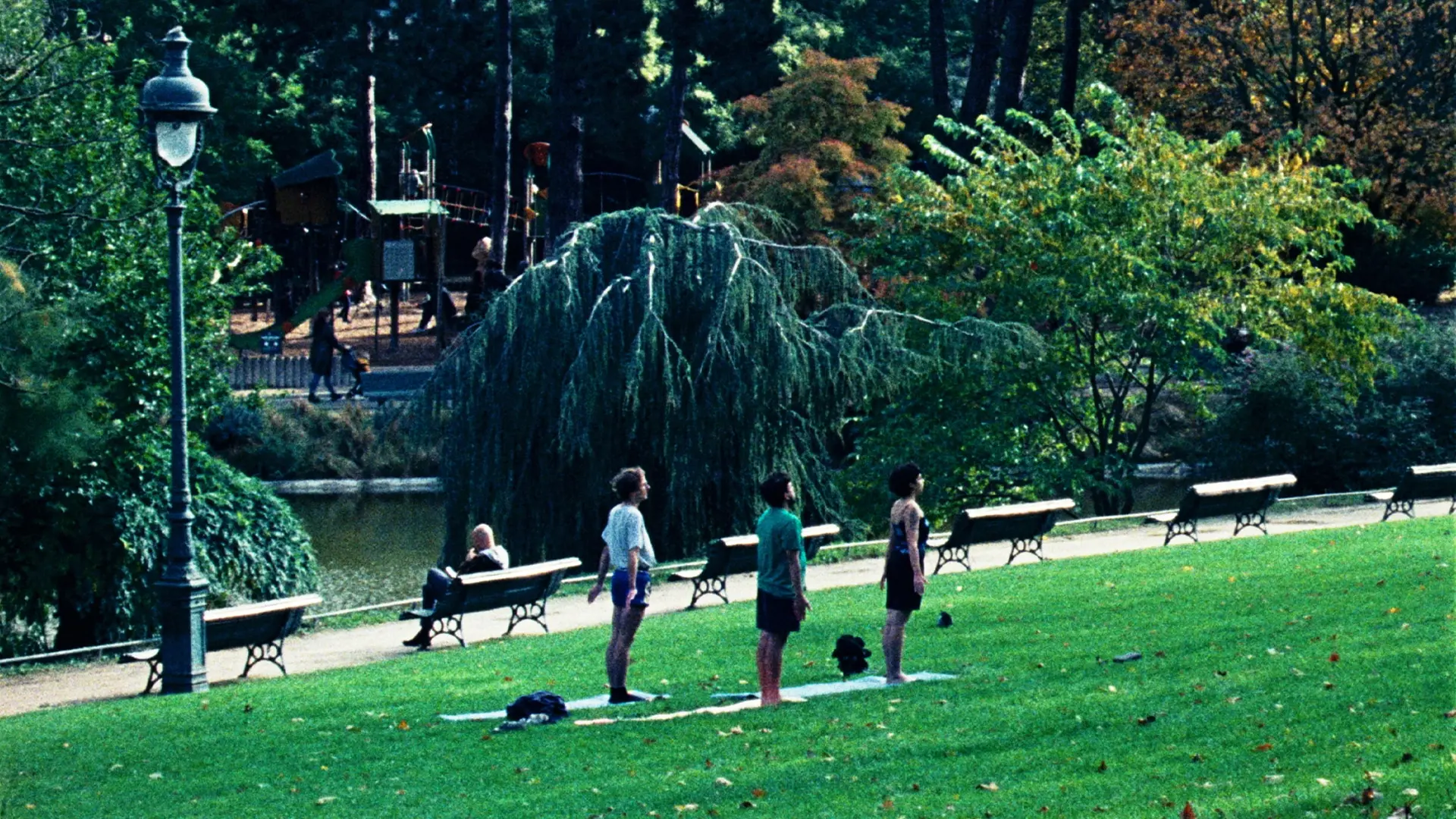
Montsouris Park (Guil Sela, 2024)
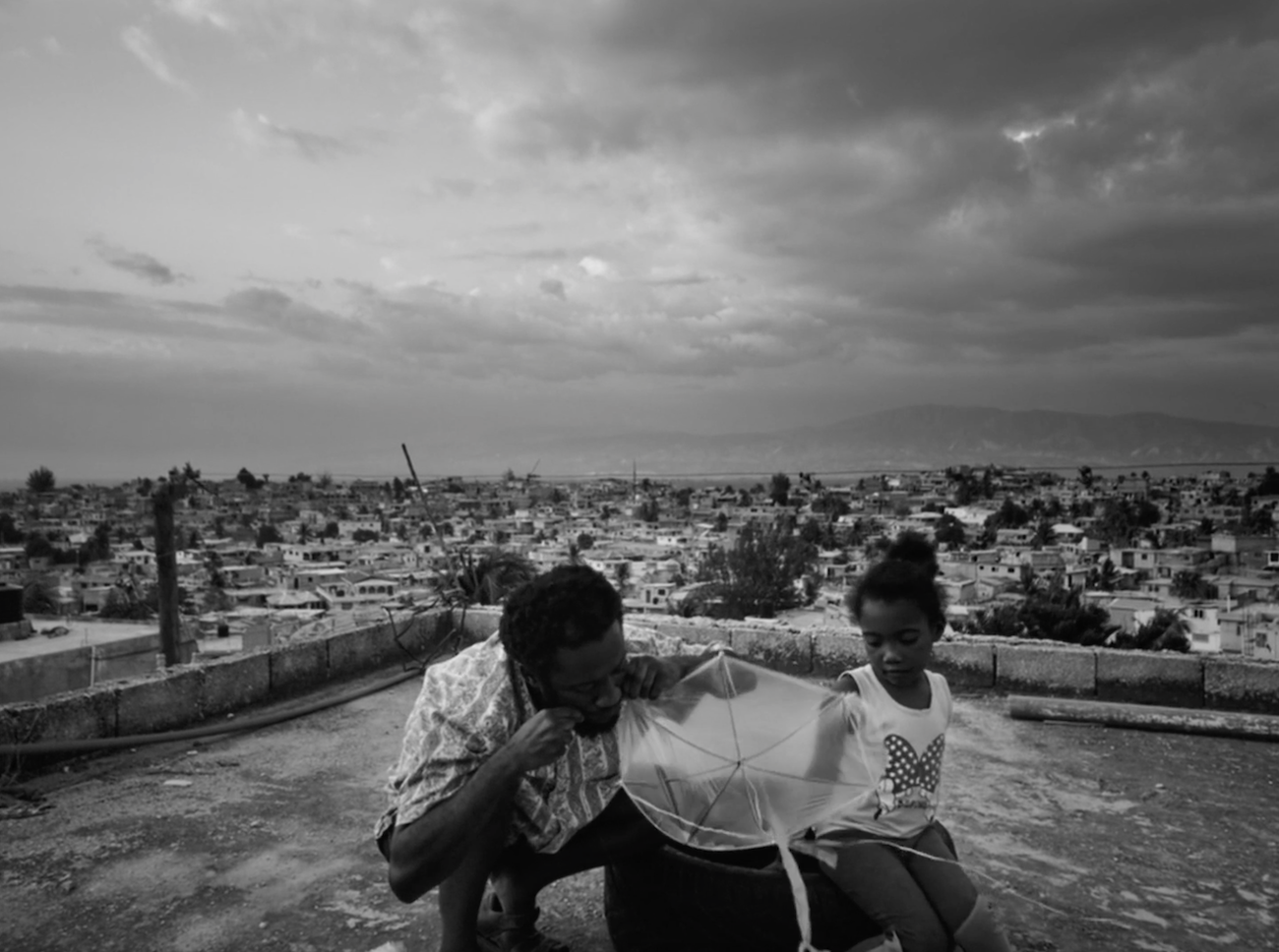
Within the concise short film format, the orchestration of a broader soundscape with its own preludes and refrains invites the audience to pay even closer attention to the characters and their social context. Both visual and sonic recurrences encourage the viewer’s immersion, as they sink into the aural state of a stranger on screen. Featured in the programme “About Love,” Haitian director Samuel Suffren’s Dreams Like Paper Boats (2024) clearly recognises how effective diegetic sound is in articulating the otherwise ineffable mystery of love. In it, the protagonist, Edouard, lives in Port-au-Prince, in the company of a cassette—a recording of his wife’s long journey to the United States, narrated by her. Engraved with the loved one’s voice, the cassette is the only tangible place holding Edouard’s longings and fantasies; from here, they can be projected to combat the distance. The record player reappears in the film’s second half, as the woman’s voice describes the hunger, thirst, and loss of life she witnessed during her trip, with a certain indifference in her tone. She says, “bodily intimacy disappears on the boat,” “in front of everyone’s eyes, you wash yourself naked.” He stops the recorder, gazes at the cassette, and squeezes it hard, as if applying force is the only way to pause the unbearable sound. Shortly after, however, we see Edouard silently and almost devoutly rewind the bare tape. This drastic contrast in holding one and the same audio cassette attests to the power of sound in synthesising emotional complexities. Buried alongside the cruelty and despair of the couple’s separation is the sonic relic of love.
If something sounds like love, though, it doesn’t mean that the love is sincere. In films, the diegetic sound conceals, surprises, and deceives, just like the way real-life sounds can sneak into your hideout and (often sarcastically) encroach on your private moments of breakdown. A fitting example of that deceptive specialism can be found in the Filipino short Cross My Heart and Hope to Die (2023), which won the Grand Prix in Vilnius. Throughout the short, the phone unceasingly rings for Mila, an underpaid worker who survived an attempted suicide. We learn from the opening scene that the insistent caller is actually the person who accidentally saved Mila’s life. For her, it is this unscripted encounter that transforms the otherwise cutting ringtone into a soothing frequency of care and hope. No wonder she starts falling for the caller, who already seems like a love interest. Director Sam Manacsa works with Ilya Selikhov and Sum-Sum Shen to deliver a meticulously calibrated sound design that saturates the close-ups of the phone ringing with suspense. Framing these visuals are the teasing, yet reluctant voices on the line, melding into the chaotic sonic environment—relentless street noise, the creak of a standing fan, and the grainy late-night radio music as a faint backdrop. As someone who’s familiar with the vivid Asian urban soundscape, I can only affirm that Manacsa understands well that, in some places, silence is not defined by the absence of sound but by its oversaturation.
Cross My Heart and Hope to Die features a plot twist, revealing the caller’s real intention as more pernicious than romantic. As soon as the criminal plan is enacted at the end of the film, neither Mila nor the audience can perceive the bustling traffic and the wailing police sirens as part of the background noise. Instead, their intrusion is felt, palpable, in the already claustrophobic interior office space, amplifying the unbearable silence of betrayal and death. What stands out in the short’s sound design is that, though it may seem suddenly suffocating, that same everyday soundscape has been present from the start, without any drastic modulation of its volume. Yet, when the film invites a wider resonance between the spectator and the protagonist, it’s the sonic intensity that marks it. In the final scene, Mila answers her caller one last time, but doesn’t say a word as her saviour, now the murderer, confirms his deception. Mila hangs up, reaches for the radio on her desk, and turns up the music volume in the only instance where a character purposefully interferes with the diegetic music in the film. Only loudness can silence her thoughts.
The use of diegetic sound exposes a deeper truth that, for whatever reason, the image fails, avoids, or refuses to disclose. Sure, it can be absorbing to zealously follow the sonic lead as a spectator, as if to decipher some hidden secrets at any cost. But isn’t it by way of mystery also how cinema acquires its meditative power? In the limited minutes of short films, our experiences of time are drenched in sound. In moments like those, I’m reminded of Tilda Swinton’s character in Apichatpong Weerasethakul’s Memoria (2021), who persistently searches for a strange sound that lingers in her memory. When attentively tuning into the on-screen sound, we quiet down the judgments and hear the film’s heartbeats.
This text was developed during the European Workshop for Film Criticism #6—a tandem workshop set during Kortfilmfestival Leuven and Vilnius Short Film Festival—and edited by tutor Savina Petkova.
The European Workshop for Film Criticism is a collaboration of the European Network for Film Discourse (The END) and Talking Shorts, with the support of the Creative Europe MEDIA programme.