The Softness of Life in a War Zone
Interview with Zoé Cauwet
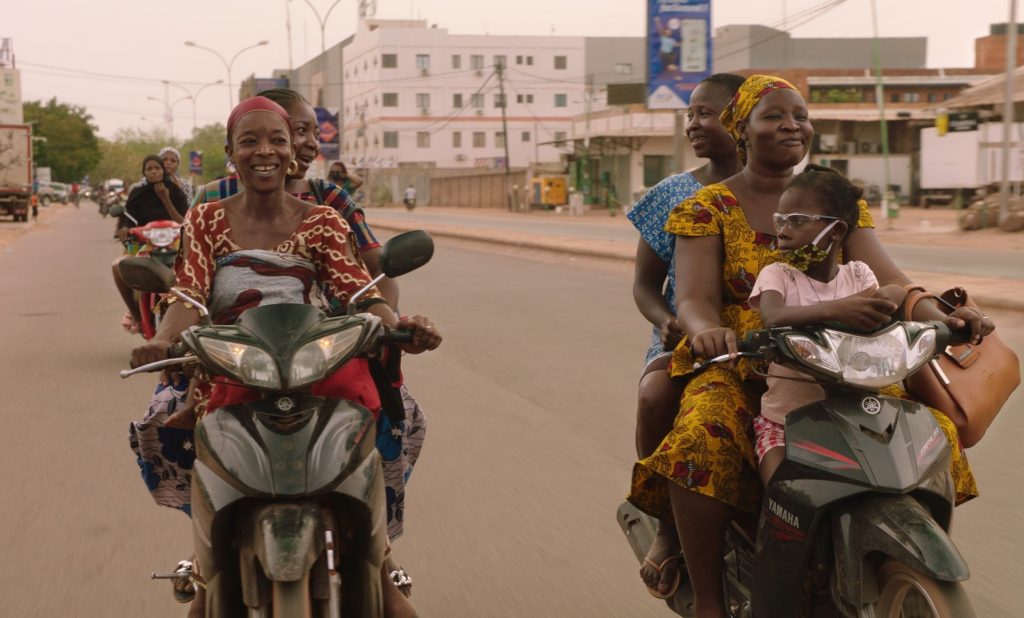
In Zoé Cauwet’s Le Grand Calao, a group of women goes on a long-awaited getaway: a moment of discovery and a break from the hustle and bustle of the world and their lives. The film was nominated for the New Critics & New Audiences Award 2026.

When I video call self-taught filmmaker Zoé Cauwet, she is in Cotonou, Benin, on the set of the feature film she started shooting just two days prior. The film was initially supposed to be shot in Burkina Faso, the setting of her short Le Grand Calao, but the country’s recent political upheaval made this impossible. A former French colony, this West African country is yet to know peace, carrying the weight of the past as it deals with the atrocities of the present: droughts, famines, coups, civil unrest, indigenous genocides, dictatorship, and jihadist terrorism. But my conversation with Zoé is not about suffering; it is about the ‘softness of life’ in a war zone, much like her short film.
This ‘softness’ is concentrated in the unassuming heroines of Le Grand Calao, in Aïcha, Abi, Clémentine, Ami, Pauline, and Adama. As members of Teel-Taaba, an association dedicated to improving women’s economic conditions and living standards, they have only one thing on their agenda for the day: go to the pool and have a good time. To them, having fun is a responsibility, because in Burkina Faso, to play means to protest. In the capital of Ouagadougou, as these women make their pilgrimage to the pool, military aircraft fly overhead, and gunshots are heard in the distance. Amidst such normalised violence, they dare to lay claim to innocence and joy, to the softness of life. The ‘softness’, Zoé tells me, permeates all aspects of her film, from how it was funded to how it continues to be screened.
Had you always set out to make a film about women and water?
Actually not. Around four years ago, I was in Ouagadougou writing another film when I met Aïcha. We became friends, and one day I went to the pool with her and other women from the association, who became the women in my film. I had this feeling that something incredible had happened that day. I didn’t know exactly what or why. These women, who hardly managed to get any free time, had somehow achieved this whole day of doing nothing. This nothingness may be normal for us, but is so precious for them. It is an exception. It is the event of a non-event, of doing nothing. I knew I had to make a film about this.
Since the film developed so organically, what was it like for you to direct these women?
I didn’t have a predetermined method. Every morning, we would do things like breathing exercises, after which I would try to explain how a scene goes from A to Z. I would first ask them to act without dialogue and then give them sentences. If there were voids between those sentences, I’d ask them to fill those with little improvisations. It was an interesting process because most of them can’t read or speak French.
Both French and Mooré (Burkinabé) are present in the film. French, of course, has a complicated history for the people of Burkina Faso as the language of the coloniser, and was also fairly recently politically demoted to the status of a “working” language. What kind of decisions did you make about the switches between Mooré and French? One of my favourite moments was Adama saying, “Hey, there is no ‘s’il vous plaît!’”.
French is always associated with the institution. For instance, the women talk in French with the waiter, but are quick to switch to Mooré. Addressing someone in French shows distance, so when they want to be more familiar, they talk in Mooré. The presence of French or white people in the film is also small, and naturally, as a white French woman, I questioned myself a lot. In the first version of the script, there was a white woman character written in so that she would eventually disappear, after which the focus would still be on the principal group of women we see now. She was not very prominent in the script, but still took a lot of space. It became clear that I had to cut this character out: if I wanted to make a film about these women, I had to really make it about them.
This singular focus on the women is something that the film’s cinematography communicates very well: slow, still, and unpretentious. What discussions did you have with your cinematographer Victor Zébo before filming?
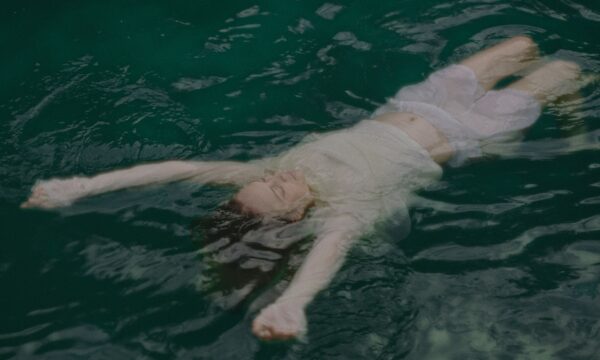
The one thing that I really wanted was for the camera to follow Abi into the water. Practically, this was complicated to do, but it was my condition: to be with Abi. If it were done in any other way, it would mean looking down at her from the top. I wanted all the characters to be filmed horizontally.
Le Grand Calao (Zoé Cauwet, 2025)
Let’s talk more about Abi, who is the youngest member of the group and the only one who has a liquid moment of discovery, a coming-of-age of sorts. Water is such a well-established motif in French cinema’s female-driven narratives, with characters floating in, jumping into, and even escaping through water bodies. What is the story behind Abi’s discovery?
It is what happened in real life. She was thrilled by the water, whereas the others didn’t care. She also wanted me to go into the pool with her, to teach her to swim. It is funny that you mention water as a metaphor for femininity and liberation, because it is true, but I did not think about that. The only thing is that she didn’t float on the day of the trip, but for the film, I really wanted her to. So what you finally see [in the film] is her actually floating for the first time.
With regard to this commitment to naturalism, can you say something about the absence of non-diegetic sound in the film?
We wanted the fabric of the sound to be close to reality. I didn’t want music in the film because that to me is extra; it’s a guide of emotions. I want people to feel what they want to feel. They should have no reason to feel.
The feeling that occupies the group of women is an obligation to have fun. They are almost stubborn about enjoying themselves, Aïcha especially. Can you talk a little about this entitlement to joy?
It’s revolutionary, because I know how people live over there and how they struggle. These current times with the jihadists and the new dictatorship are really, really tough. Even making this film was somehow an act of resistance. It was like saying, “No, you can’t destroy us”. It’s not like we weren’t afraid while filming. We had military protection 24 hours a day, but I don’t think they were really protecting us; they were likely spying on us. It makes me sad, because I can’t even shoot over there anymore, and I wanted these women to be a part of my feature film as well.
That makes this film an indispensable record of something beautiful and rebellious. I see this urgent need to preserve moments in the film itself, when, towards the end, the women take pictures together on each of their phones. Soon after that, you show us shots of empty chairs and tables, and the poignant image of a wet footprint evaporating and disappearing in the heat. How do you understand this simultaneous permanence and impermanence?
What you’re saying is true. I think a lot about this philosophy of keeping traces of things. Even though in the film we are playing at “presence”, that present tense is a construction of something that has already passed. It is the same thing with memory. We record a memory to keep the present vivid, but it’s already gone. What we keep of the present is never the present. The present time is always an event and a non-event. This film is something that we somehow kept from the present of that trip.
What do Aïcha and the others think of the film?
They love it. They are really, really proud of it. And many people in Burkina Faso also love it because most films [they can see themselves represented in] only show their struggles and miseries, but this one shows their strength and happiness. I want to hold more screenings for more people to see, but putting them on is quite expensive, so whenever I get any money from a festival, I give it to Aïcha so they can show the film to more people. They have a mobile cinema, so they take the screen and sound system to different places, and a lot of children come to see it.
Le Grand Calao was nominated for the New Critics & New Audiences Award 2026 at Vienna Shorts by Ana Jiménez, Lan Mi Lê, Marian Freistühler, Regina Campos Ccarhuarupay, Sadaf Biglari, and Sara Simic, the participants of the European Workshop for New Curators #1.
The European Workshop for New Curators, and the New Critics & New Audiences Award are projects co-produced by the European Network for Film Discourse (The END) and Talking Shorts, with the support of the Creative Europe MEDIA programme, and in collaboration with This Is Short.