
There is a Fungus Among Us
Spray and Pray
In Veneta Androva’s latest speculative documentary Spray and Pray, online hustlers and a humanoid mushroom spread their deepfake spores across the web.
Here’s what a typical Bulgarian family experience looks like: you are sitting at the dinner table and your middle-aged conservative uncle starts explaining how the “genders” (yes, in Bulgaria the term gender is commonly used as a slur, even in the plural) are abducting children and sending them to Norway to be adopted by gay couples. God forbid you try to argue–you’d be instantly met with an accusation that might sound something like: “You’re just not reading the right sources; how naive of you!” In her experimental documentary Spray and Pray (2026), Berlin-based Bulgarian visual artist, filmmaker and animator Veneta Androva digs up said sources and unlocks the mouldy basement of the internet, where so-called mushroom websites are mining for money using the tools of disinformation.
What those sites usually contain has nothing to do with fungi, and the only way you could classify their contents as “right” is if you mean “right-wing”. Flashy headlines with clickbait thumbnails, masquerading as truthful news, threaten the reader with murderous migrants and evil LGBTIAQ+ conspiracies while their administrators profit from every click. As the film shows through anonymised interviews, these platforms are sometimes run by people who simply see them as an easy cash-grab opportunity, other times by company CEOs who manage a whole web of similar subdomains. Relying on social media’s proven potential to spark fear and hatred, the automatically generated articles are easily spread with the help of internet trolls and AI bots, to then become the reason your Bulgarian grandma asks you why drag queens are teaching BDSM in primary schools in Scotland, for example.
Spray and Pray personifies this internet scheme as a 3D-animated effeminate (or, in pure Gen-Z, yassified) anthropomorphic mushroom, dispersing spores and fake news in the vastness of a dark forest. Its grotesque body and its paradoxically graceful movements blend with Daniel Windisch’s menacing techno soundtrack to become bewildering nightmare fuel, to a transfixing effect. At the bottom of the screen, a hi-tech-looking text box containing disinformation assessments and sentiment scores accompanies each title the mushroom recites, also noting the likelihood of its possible AI origin. Androva spent two years on extensive research, scanning through hundreds of sources and constantly monitoring mushroom websites and networks of disinformation to synthesise the film’s “script”. To analyse the websites’ parameters, she collaborated with experts and computational linguists, and used Bulgarian-language models developed at the GATE Institute in Sofia.
The long list includes titles such as “Unseen gender orgies on US streets, children targeted (PHOTOS)” and “Fear grips Bulgaria over refugee hordes, danger is huge”, the first one marked as written with AI, the second one by a person. All of them seem to target marginalised groups, presenting tendentious views and warning of imaginary enemies. The mushroom’s calm, carefree tone intentionally conflicts with its uncanny physical appearance, designed by Androva herself. Its scandalous statements invoke both laughter at their absurdity and a certain uneasiness, an ominous feeling of dangers lurking in the darkness. The realisation of how easily propaganda spreads, increasingly threatening the safety of oppressed communities, works both rationally and instinctively, posing the question of who the real villain is.
This setting alternates with interviews with supposed mushroom-site users and administrators, who share their experience and explain the mechanics of profiting from this strange line of work. Based on their testimonies, it seems quite easy to earn a considerable amount of money just by sharing links to different Facebook groups, begging your friends for clicks and persistently spamming any Viber community you can get access to.
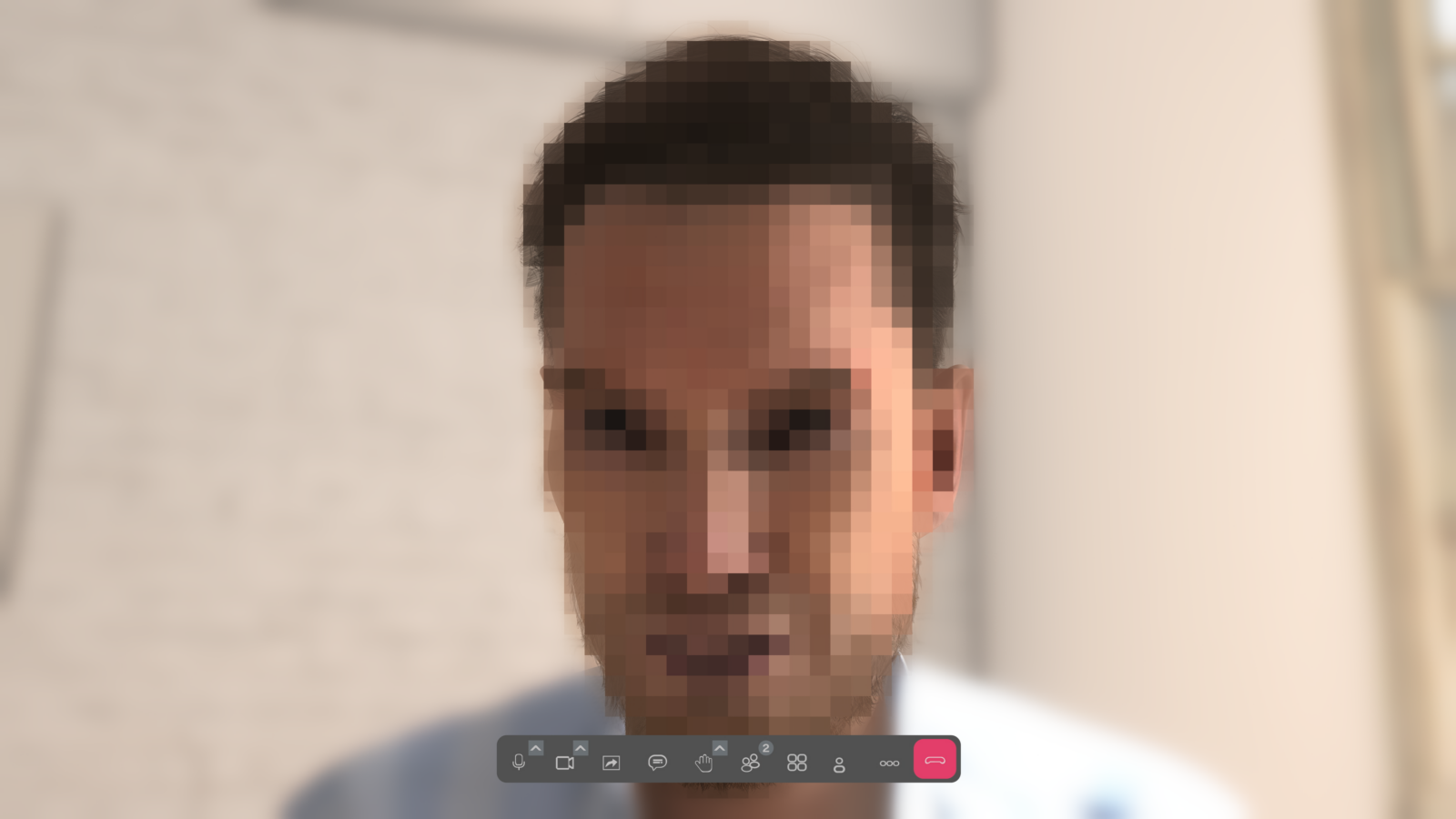
At first glance, the interviewees pass for real people. Only after a minute or two does their uncannily stiff body language become noticeable, exposing them as 3D-animated. Their speech is casual, their tone natural, yet something feels off, until the credits reveal they’re synthetically generated, with voices contributed by actors Marta Djourina, Asparuh Donchev, Kiril Anchev, Bojidar Kassabov, and Liusi Stavreva. Yet the illusion of watching real footage is so strong; the characters’ blurred faces, the different backgrounds, from business offices to video-call screen recordings, make these interviews seem absolutely credible despite being artificial. As they speak to an unseen and unheard interviewer, they expose a fictionalised version of Androva’s research results, expressing different motivations and attitudes behind their actions.
The very beginning of the film presents us with a skeptical woman, who claims she didn’t make that much money, admitting that sharing posts on Facebook was a waste of time. Another character is relentless in his refusal to take responsibility for the fake news his website is generating, stating that all news is unreliable nowadays–a familiar cop-out usually accompanied by claims such as “I don’t vote, because all politicians are frauds”, and so on.
Although fictitious, these people feel painfully recognisable. Androva plays with archetypes and clichéd phrases encountered in political discourses not only in Bulgaria but all around the world (wide web). By transforming the raw data she collected into scripted interviews, she reminds the viewer that behind every deceitful business strategy there’s a human being, and behind every discriminatory ideology is a human being in power. Furthermore, the characters themselves resemble NPCs (non-playable characters) in a video game with their simple design, devoid of distinct personality traits. Their lack of characteristics reminds us that anyone could be in their place, reduced to a simple tool of the system. Androva also gently addresses the ethical questions surrounding AI use; since she used it for analysis and research, she prompts viewers to be aware of its potential to create and replicate misleading information.
Something between a film and a visual art project, Spray and Pray fits perfectly in both a gallery and a film theatre, and it does, as it is exhibited in the Bulgarian pavilion at this year’s Venice Biennale. Dramaturgically, its structure may feel a bit repetitive, but the film’s purpose isn’t only to entertain. It also demonstrates how, just like fungi, fake news spreads, grows, and secretly communicates through invisible neural networks, but often when you pick it, it turns out to be filled with worms or straight-up poisonous. And you know what they say: all mushrooms are edible, but some only once.

There are no comments yet, be the first!