
Absence Leaves a Trace
Cairo Streets
Moving between personal recollection and cinematic reflection, Abdellah Taïa’s Cairo Streets traces an intimate journey through a city marked by absence and desire.
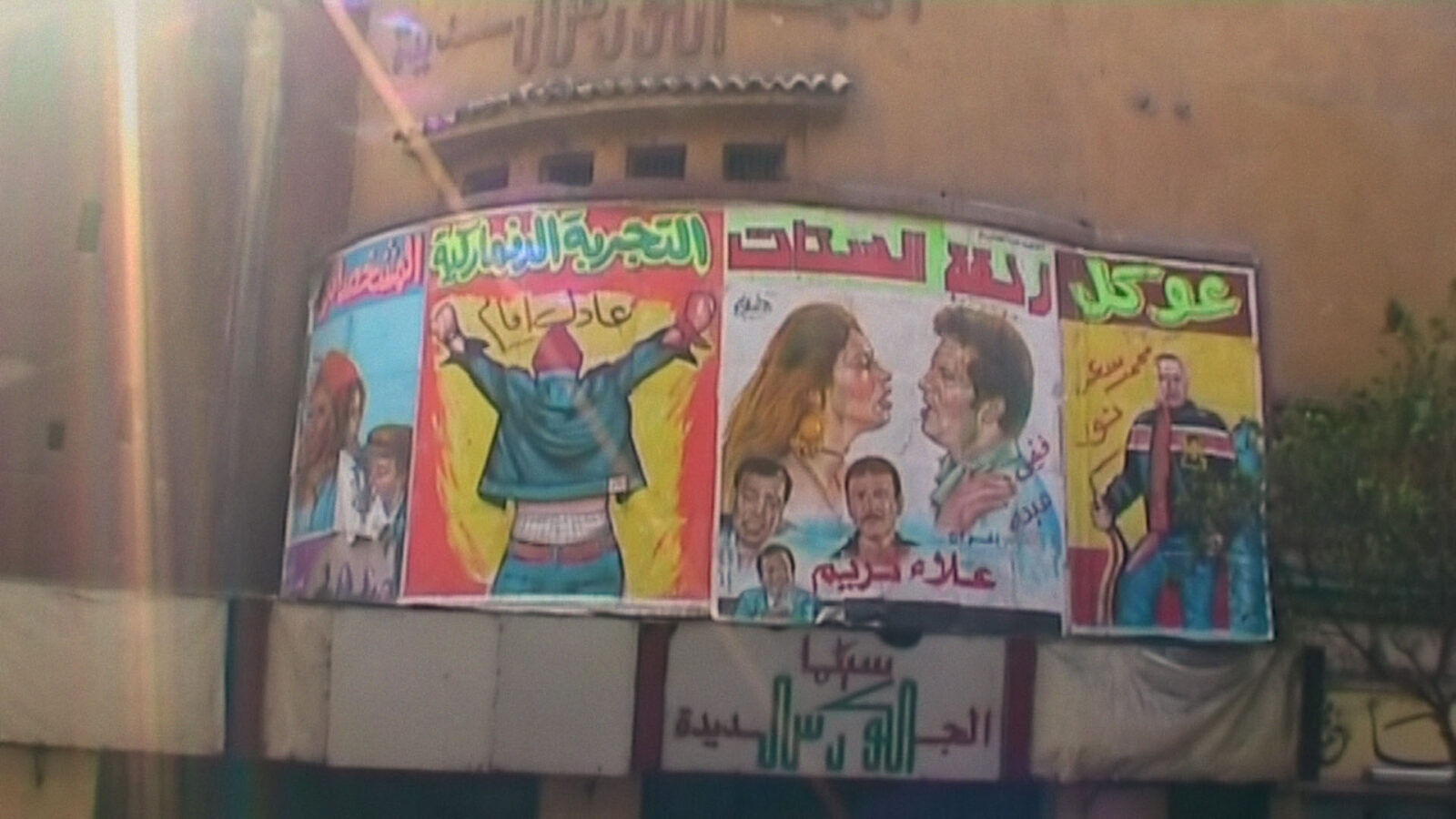
There are certain films that make me realise how much of my own relationship with Cairo now exists through images. I have not been able to return home for years, so the city survives for me in traces: old family videos, phone recordings, photographs, and the footage I carried away with me. Not the Cairo people think they know, but a Cairo pulled from an old phone or forgotten hard drive: traffic folding into itself at dusk, microbuses forcing their way through impossibly small gaps, café conversations spilling onto pavements, apartment blocks disappearing into blown-out light, feluccas lit in neon as they pass down the Nile. Watching Abdellah Taïa’s short film Cairo Streets, I felt that strange ache of recognising a city through someone else’s footage. Cairo looked ordinary, but not neutral. Like a place that had kept too much.
The film unfurls through recordings the Moroccan filmmaker made while returning to Cairo for work in 2007. From the opening, the footage is shaped by Taïa’s search for Omar, a man he once loved in the city and can no longer reach. At first, the low fidelity of the camcorder footage almost feels like a deliberate aesthetic choice. Its unstable framing, washed-out colours and digital grain sit close to the way contemporary moving-image work often returns to obsolete cameras and imperfect archives. But the longer the film continues, the more that reading falls apart. These are not images pretending to be memory. They are memory. What first appears casual slowly becomes something much more vulnerable: a diary assembled nearly twenty years later from footage that may have begun as a record of return, but is now imbued with longing, searching, and the impossibility of finding Omar again.
There is something very moving about watching Taïa rediscover his own footage. The camera has the excitement of someone still learning where to look, but also the instinct of someone filming what mattered before he fully understood why. Over several days, Taïa repeatedly returns to the same mirror, slowly moving in and out of focus as his reflection bends and shifts across the glass. Elsewhere, the camera shakes or seems unsure where to settle in the dark. A self-portrait of him lying in bed and staring at the ceiling feels especially private. So does his conversation with Oum Fatma in the kitchen, where she speaks about marriage and remembers Fouad, the person she loved and lost.
These quieter moments sit alongside Downtown Cairo, fleeting conversations, and handsome young men staring back at the camera–some passing through the frame and others standing still. Everything appears with complete ordinariness. Nothing announces itself as important. The footage feels slight, almost accidental, but Taïa’s return to these images changes their weight. What may once have been filmed out of curiosity begins to feel like evidence of a feeling he could not fully name at the time. That feeling gathers around Omar, or maybe more accurately, around Omar’s absence.
Omar is never offered to us directly. That absence is what gives Cairo Streets its tender ache. Taïa returns to this footage not because it contains his past lover, but because it belongs to the time and place in which Omar existed for him. The film’s written messages are simple and almost painfully direct: white text on black announces that Taïa is back in Cairo, that he has lost Omar’s number, does not know where he lives, and needs to find him before leaving again. They do not explain the images. Instead, they change the act of looking itself. Faces, streets, and passing bodies are no longer simply observed; they become charged by the desire behind the camera. Looking is both a way of taking in the city and of holding close the world in which Omar once existed: the atmosphere of that return, the feeling of searching without knowing where to begin, and the strange hope that he might appear by accident at the edge of the frame.
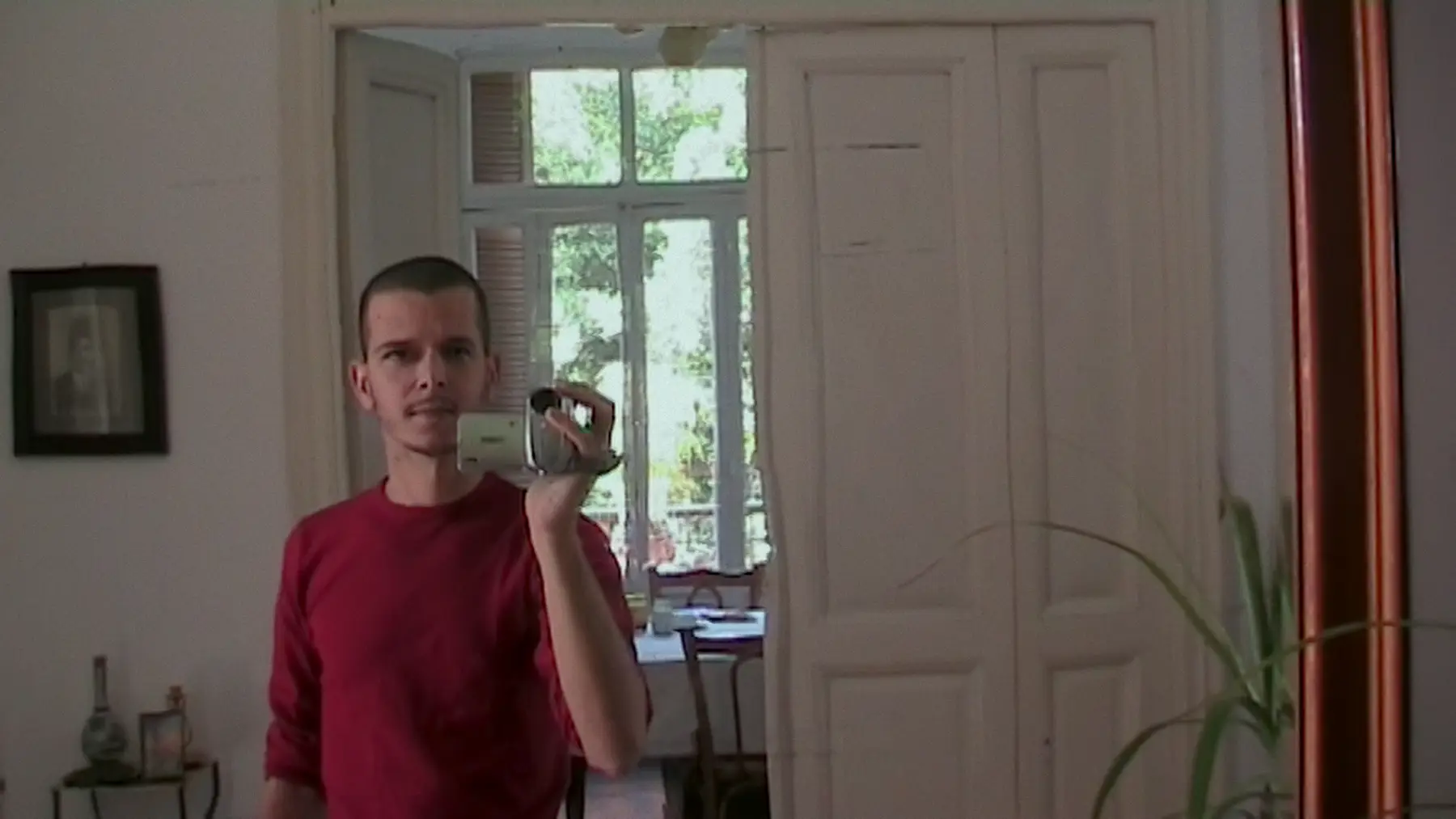
Cairo Streets (Abdellah Taïa, 2025)
What stayed with me is that the film preserves not the certainty of love, but the ache that comes after it. A street corner takes on meaning because Omar might once have passed through it; a café carries the feeling of belonging to the same world. Taïa remembers them holding hands in a cinema, and later his camera arrives at what seems to be that same place, only to find its doors shut. Cairo cannot give Omar back, but it keeps offering traces of him in the places that once held their intimacy and can no longer be entered in quite the same way. He never appears in the images, yet their return keeps Taïa close to the memory of having desired him.
Cairo Streets is not a record of romance in any straightforward sense. What it holds instead is the residue of love: places, images and a few sentences addressed to someone who does not answer. Omar stays outside the frame, but the footage slowly begins to organise itself around his absence. When the film suggests that hope has left and that Cairo has “swallowed” him, the line does not feel melodramatic. It feels painfully exact. From that point on, even the most ordinary images of the city seem marked by loss.
The film’s way of looking also recalls Youssef Chahine, whose presence gently haunts the work. In Chahine’s office, Taïa’s camera moves across posters and mood boards before settling on recorded footage of the two of them speaking about the film Chahine was making at the time. “They want me to be quick,” Chahine says, “but in my work, I’m very slow and precise. I’m the one who slows down time.” The line feels unexpectedly close to Taïa’s own approach to filming, with its patience, searching quality and attention to moments that might otherwise pass unnoticed.
Chahine’s presence carries another weight too. For generations of queer Arabs, his films offered ways of seeing desire, admiration and intimacy between men long before queer representation felt possible across much of the region. Through the semi-autobiographical reflections of his Alexandria films and the charged images of male beauty and longing that recur across his work, Chahine gave many viewers a first glimpse of queer possibility on an Arab screen.
Taïa’s references feel like more than just an homage. They place Cairo Streets within a wider history of queer Arab image-making, while the film never loses sight of something painfully simple: a man trying to find someone he loved. If Chahine imagined desire through fiction, Taïa discovers it inside his own footage. Looking back at images shot years earlier, he realises that his camera had already begun to hold feelings he perhaps could not yet say out loud.
By the end, Omar remains unreachable, but the search for him has changed the way Cairo appears to us. The footage cannot return Taïa to that Cairo, or to the young man he once was. It can only preserve the act of looking. Watching Cairo Streets, I kept thinking about the many queer Arab stories that have been lost to history: lives never documented, loves kept hidden, almost-loves that disappeared before anyone could recognise them. Taïa’s film cannot recover all of them. But through these fragile images, it insists that even what is missing can leave a trace.

There are no comments yet, be the first!